



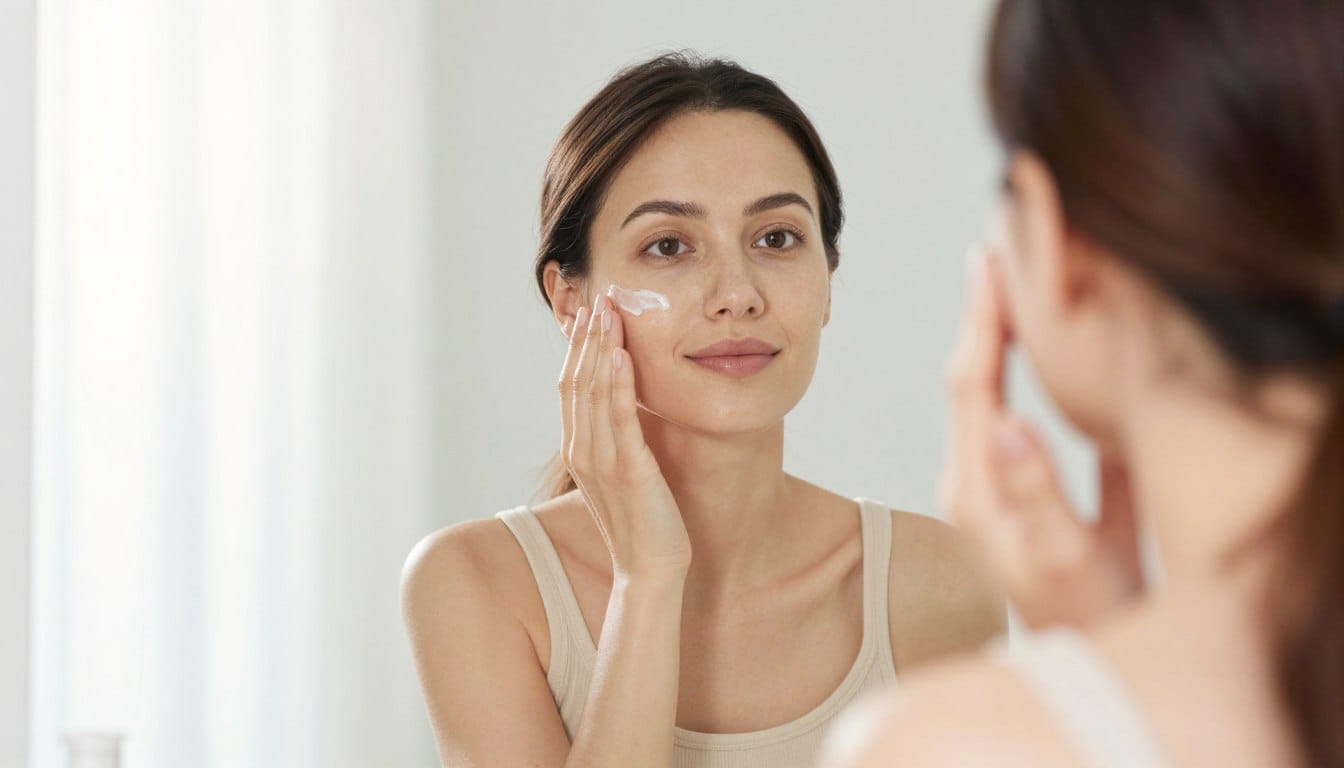
You deserve hydration that feels comfortable and looks fresh. It should also stay out of the way of your SPF and makeup. A lightweight daily moisturizer should soften and smooth without leaving a greasy film.
- Breathable Hydration: Why Women Love a Lightweight Face Moisturizer
- What “breathable” hydration means for everyday skin comfort
- How a non-greasy moisturizer supports a fresh finish under makeup
- Signs your current daily facial moisturizer feels too heavy
- How to Choose a Daily Facial Moisturizer for Your Skin Goals
- Balancing hydration, glow, and shine control
- Texture guide: gel-cream, lotion, and hydrating face cream
- What to look for in a moisturizer for all skin types
- Lightweight Daily Moisturizer: What Makes It Feel Weightless
- Hydrating Daily Moisturizer Ingredients That Deliver All-Day Comfort
- Hyaluronic acid, glycerin, and panthenol for water-based hydration
- Ceramides and squalane for barrier support without heaviness
- Soothing additions for stressed or tight skin
- Oil-Free Moisturizer Benefits for Shine, Breakouts, and Humidity
- Who benefits most from an oil-free moisturizing lotion
- Non-comedogenic claims: what they mean and what they don’t
- Summer and humid-climate tips for a daily hydrating moisturizer
- Moisturizer for Sensitive Skin: Keeping It Calm and Comfortable
- Common irritants to avoid in a daily hydrating moisturizer
- Fragrance-free vs. essential oils in a natural daily face lotion
- Patch testing and introducing a new hydrating face cream
- Moisturizer for All Skin Types: Finding the Right Balance
- Daily Hydrating Moisturizer vs. Hydrating Daily Face Cream
- When a lotion is better than a cream
- How to choose based on seasonal skin changes
- Layering strategies to avoid heaviness
- Natural Daily Face Lotion: What “Natural” Can (and Can’t) Do
- Non-Greasy Moisturizer Performance Under Sunscreen and Makeup
- How to prevent pilling with SPF and primer
- Wait times and layering order for best results
- Choosing a lightweight face moisturizer for dewy vs. matte looks
- How to Apply a Daily Facial Moisturizer for Maximum Hydration
- Day vs. Night: When a Lightweight Face Moisturizer Is Enough
- What to use when you need more than an oil-free moisturizer
- Adjusting hydration after retinoids, acids, or exfoliation
- Nighttime add-ons that keep the texture breathable
- Common Mistakes That Make a Hydrating Face Cream Feel Heavy
- Using too much product or applying it to dry skin
- Mixing incompatible layers (silicones, oils, SPF)
- Ignoring climate, hormones, and skin-barrier changes
- What to Look for on the Label of an Oil-Free Moisturizing Lotion
- Conclusion
Think of “breathable hydration” as the sweet spot. Your skin feels supple and calm, but never coated. The right lightweight face moisturizer gives you bounce and ease, not shine or residue.
In the sections ahead, you’ll learn what matters most for your skin. This includes your skin type, condition, season, and climate. You’ll also discover how a lightweight daily moisturizer should behave under sunscreen, primer, and foundation.
And here’s the part many women miss: “lightweight” is about texture and finish, not a lack of performance. A well-made lightweight face moisturizer can support your skin barrier. This is true even when your routine includes long commutes, office AC, summer humidity, or travel.
By the end, you’ll know how to choose a lightweight daily moisturizer that fits your routine and skin goals. Hydration will feel like a quiet upgrade, not another layer to manage.
Breathable Hydration: Why Women Love a Lightweight Face Moisturizer
Some mornings, your skin wants moisture but not a “mask” of product. That’s where breathable hydration comes in. It offers comfort without feeling the formula on your face.
When your daily facial moisturizer sinks in fast, your skin stays soft and flexible. This is true through meetings, errands, and weather changes. You won’t worry about shine, stickiness, or a heavy layer.
What “breathable” hydration means for everyday skin comfort
In practical terms, “breathable” means hydrated, calm skin that doesn’t feel coated. You get that smooth, cushioned feel, but your pores don’t seem like they’re wearing anything.
This matters when real-life triggers hit. Tightness after cleansing, warm subway air, or midday shine can be a problem. A daily facial moisturizer with a lighter texture helps you stay comfortable, even when humidity rises.
How a non-greasy moisturizer supports a fresh finish under makeup
Makeup tends to look better when your base isn’t sliding around. A non-greasy moisturizer absorbs quickly. This means foundation grips instead of drifting, and blush stays where you put it.
It also helps cut down on the “product balling up” problem. When your daily facial moisturizer leaves less residue, each layer has a better chance to set cleanly.
Signs your current daily facial moisturizer feels too heavy
If your skin looks shiny within an hour, it may be more than a glow. Foundation separating around the nose, pores looking clogged, or sunscreen pilling can all point to a rich formula that’s sitting on top.
Another clue: waking up with a greasy film, even when you used a small amount. A non-greasy moisturizer can feel easier in these moments. But context matters—what feels perfect in January can feel too rich in July.
| What you notice | What it often means | What to try next |
|---|---|---|
| Shine returns fast, especially on the T-zone | Too much slip or occlusion for daytime wear | Switch to a lighter daily facial moisturizer and apply a thinner layer |
| The foundation breaks apart by lunchtime | The moisture layer isn’t setting before makeup | Use a non-greasy moisturizer and wait a few minutes before applying foundation |
| Sunscreen pills during application | Incompatible layers or too much product | Apply less, let each layer dry down, and keep textures lightweight |
| Pores look congested, especially around the nose | The formula may feel too rich for your current balance | Try a lighter texture on oily areas and reserve the richer product for dry zones |
How to Choose a Daily Facial Moisturizer for Your Skin Goals
Before buying another moisturizer, decide what matters most to you. Do you want comfort, a glow, or to control shine? Naming your goal makes your daily routine simpler. You focus on what fits your life, not just the latest trends.
It’s important to know the difference between hydration and moisture. Hydration is water in your skin, while moisture comes from oils and softeners. You can look shiny but feel tight, which is why just blotting isn’t enough.

Balancing hydration, glow, and shine control
If your skin gets shiny by noon, look for ingredients that hold water and a fast-drying finish. For a glow, aim for a smooth surface, not heavy oil. The goal is skin that feels flexible, not oily.
- Comfort first if you notice tightness after cleansing or flights.
- Shine control if sunscreen and makeup slide off by midday.
- Calm if your cheeks flush easily or sting with actives.
Texture guide: gel-cream, lotion, and hydrating face cream
Texture affects how a product feels under SPF and makeup. The right texture makes your day easier. A hydrating face cream is great at night but might be too rich for daytime.
| Texture | Feels Like | Best For | Watch For |
|---|---|---|---|
| Gel-cream | Cool, light slip; minimal residue | Humidity, oily or combination skin, quick mornings | May not feel like enough during cold weather or retinoid use |
| Lotion | Soft, flexible finish; easy to layer | Normal to combination skin, everyday wear under sunscreen | Can pill if you rub too hard over serum and primer |
| Hydrating face cream | Plush, cushiony; more barrier support | Dry spells, irritation, winter air, and post-treatment skin | May feel heavy under makeup if you apply too much |
What to look for in a moisturizer for all skin types
A good moisturizer for all skin types balances hydration and comfort. It keeps your skin soft without trapping heat or oil. For many, being gentle is as important as being effective.
- Humectants like glycerin or hyaluronic acid for hydration support
- Barrier helpers like ceramides, squalane, or fatty acids for softness
- Minimal irritants, if you’re sensitive or using active ingredients
Your skin type might stay the same, but your needs can change. Stress, hormones, travel, and weather can all affect what you need. Being flexible helps you choose the right moisturizer for changing conditions.
Lightweight Daily Moisturizer: What Makes It Feel Weightless
A lightweight daily moisturizer feels “invisible” when it matches your skin and routine. It’s all about balance. The formula’s water content, oil level, and how it sets on your skin create that light feel.
If your moisturizer gets shiny or pills under SPF, it’s not just your mind. It’s often the ingredients’ interaction with water and your skin. Knowing these roles makes shopping easier.
Humectants draw water into your skin, making it look plumper without being greasy. Emollients soften rough spots and help makeup stay in place. But too many can make it feel heavy. Occlusives keep moisture in, but can make it feel thick in warm weather.
| Ingredient role | What it does on skin | How does it affect the lightweight feel | What you may notice in the mirror |
|---|---|---|---|
| Humectants | Draw water into the upper layers for bounce and comfort | Helps a lightweight daily moisturizer feel fresh, but it can start a bit sticky | Plumper look; tightness eases; tackiness fades as it absorbs |
| Emollients | Smooth and soften to reduce rough texture | Improves glide, but too much can feel heavy or leave residue | Foundation sits smoother; pores look softer; shine may build by midday |
| Occlusives | Seal moisture to slow water loss | Great for dry skin, but can reduce “breathable” comfort in humidity | Longer comfort; more sheen; makeup may shift if the layer stays slick |
The “sticky” feeling often comes from water-binding ingredients. A good lightweight moisturizer balances them with fast-setting supports. This makes the finish smooth, not sticky.
Texture on your fingertips is important, but how long it lasts is more so. Too much slip can make makeup slide, while too much film can pill under SPF or primer.
When shopping, look for fast-absorbing, weightless, and gel-cream labels. But the real test is how it works with your sunscreen, foundation, and climate. If it blends well, you’re on the right track to a breathable, lightweight moisturizer.
Hydrating Daily Moisturizer Ingredients That Deliver All-Day Comfort
If your skin feels tight after washing or gets dry by midday, the ingredients matter a lot. A daily hydrating moisturizer can be light but keep your face comfy all day. This is true for office air, workouts, and weather changes.
The goal is simple: help skin hold water, support the barrier, and calm that “overworked” feeling. A hydrating daily moisturizer does this best when it’s built in smart layers, not heavy oils.
Hyaluronic acid, glycerin, and panthenol for water-based hydration
This hydration trio works well for many women because it targets dehydration without adding grease. Hyaluronic acid helps bind water at the skin’s surface, while glycerin pulls moisture into the upper layers so your skin feels less “crinkly.”
Panthenol (pro-vitamin B5) adds a cushiony comfort that can make skin feel more elastic, even when air conditioning makes your face feel dull. In a daily hydrating moisturizer, these ingredients support bounce and softness without a slick finish.
Ceramides and squalane for barrier support without heaviness
When your skin feels rough or tight, think barrier support. Ceramides help reinforce the skin’s natural barrier, which is often stressed by retinoids, exfoliating acids, or winter wind.
Squalane adds lightweight slip, so makeup sits better and dry patches look smoother, but it usually won’t leave you shiny. In a hydrating daily moisturizer, this pairing can feel like comfort that breathes.
Soothing additions for stressed or tight skin
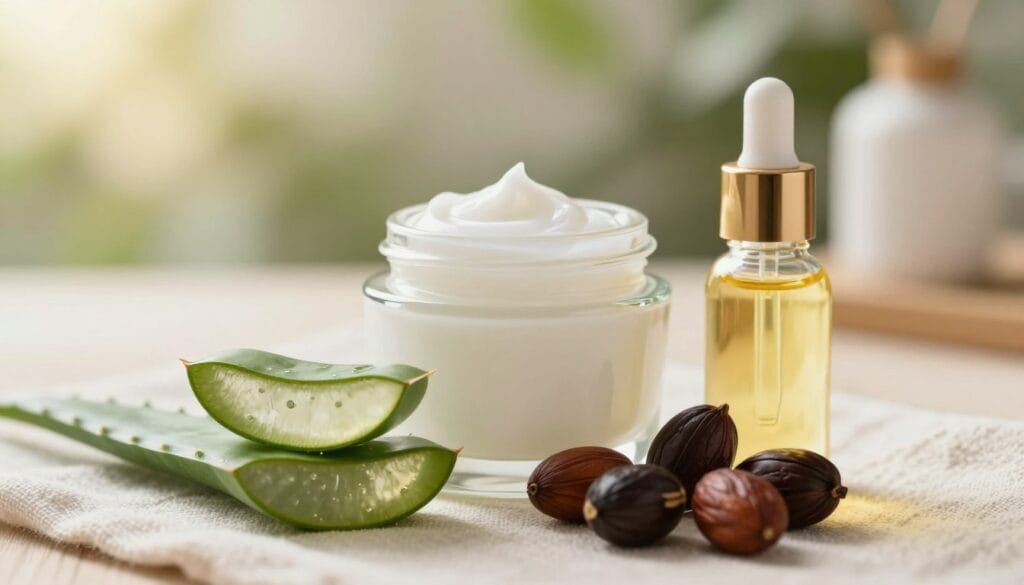
On “stressed skin days,” soothing ingredients can help reduce the feeling of irritation and calm the look of redness. Many formulas lean on colloidal oatmeal, aloe vera, allantoin, or centella asiatica to take the edge off when you’ve overdone activities or the forecast flips fast.
If you flush or sting easily, a daily hydrating moisturizer with fewer possible irritants (like strong fragrance) tends to feel more predictable. A hydrating daily moisturizer can be effective without that “hot” sensation after application.
| What your skin feels like | Ingredients to prioritize | What do they help with | How it tends to wear |
|---|---|---|---|
| Dehydrated, looks dull by midday | Hyaluronic acid, glycerin, panthenol | Helps skin hold onto water for a plumper, less tight feel | Light finish that layers well under SPF and makeup |
| Rough, tight, easily thrown off by activities | Ceramides, panthenol | Supports a more resilient barrier and reduces that “pulled” feeling | Comfortable wear with less flaking and patchiness |
| Dry patches, but you hate shine | Squalane, ceramides | Softens and smooths without the weight of heavier oils | Silky slip, more even makeup, minimal greasiness |
| Stings, flushes, or feels irritated | Colloidal oatmeal, centella asiatica, allantoin, aloe vera | Soothes the look of redness and eases the sensation of discomfort | Calmer feel through the day, especially after weather changes |
Oil-Free Moisturizer Benefits for Shine, Breakouts, and Humidity
An oil-free moisturizer provides hydration without adding excess oil, making it ideal for controlling shine and reducing breakouts. Lightweight formulations from trusted brands like Neutrogena and Clinique absorb quickly, leaving skin smooth and comfortable even in humid conditions. By balancing moisture without clogging pores, these products help maintain a clear, matte complexion while supporting overall skin health.
If you wear sunscreen or makeup, this is even more important. A moisturizer that dries clean can help your makeup stay smooth. This means you won’t need to keep adding powder all day.
Who benefits most from an oil-free moisturizing lotion
People with oily skin or a combination of oily and dry skin will love it. It keeps your skin hydrated without making it oily.
It’s also great for those who get breakouts. It lets your skin breathe while keeping it comfortable in tight areas.
- Midday shine that disrupts makeup wear
- Clog-prone pores around the nose, chin, or forehead
- Hot-commute skin that feels sticky in minutes
Non-comedogenic claims: what they mean and what they don’t
“Non-comedogenic” means the product is less likely to clog pores. It’s a good thing to look for in an oil-free moisturizer. But it’s not a 100% guarantee.
How your skin reacts and how well you clean it at night matter too. Even the best oil-free moisturizer can be too much if you layer too many products.
Summer and humid-climate tips for a daily hydrating moisturizer
In humid places, use less moisturizer than you think. Apply it to damp skin and wait a minute before applying sunscreen. This prevents layers from sliding off.
In hot, dry places, use a bit more moisturizer. But keep it light. Look for ingredients like glycerin and hyaluronic acid for extra hydration.
In desert heat, you might need a bit more moisturizer. But use it sparingly. An oil-free moisturizer can provide comfort with ingredients like ceramides.
| summer climate | How skin tends to feel | How to use an oil-free moisturizer | A layering move that helps |
|---|---|---|---|
| Humid coasts (Gulf, Southeast, Mid-Atlantic) | Sticky, shiny, makeup shifts | Use a small amount on damp skin; let it set | Skip rich cream; go moisturizer → SPF to avoid a heavy stack |
| Hot Southern summers (Texas, Florida, Deep South) | Oil breaks through fast, and pores look larger | Apply thinly and focus on the center of the face | Choose lighter SPF textures; wait 60–90 seconds between layers |
| Desert heat (Arizona, Nevada, inland California) | Tight but shiny, flaky edges | Use a bit more oil-free moisturizing lotion and press it in | Add a hydrating serum under it, then keep SPF lightweight |
Moisturizer for Sensitive Skin: Keeping It Calm and Comfortable
If your face stings, flushes, or feels hot fast, comfort is key. The right moisturizer for sensitive skin keeps your barrier steady. Your goal is simple: fewer surprises, more calm.
Common irritants to avoid in a daily hydrating moisturizer
Sensitive skin often does best with formulas that skip troublemakers. Added fragrance is a common trigger, making things worse.
Harsh alcohols can also be a problem. They give a quick-dry feel but can leave skin tight. If you’re choosing a moisturizer for sensitive skin, scan for “denatured alcohol” or “SD alcohol” near the top of the list, and be cautious if you’re already dry or peeling.
- Added fragrance (often listed as “fragrance” or “parfum”)
- Essential oils that can act as a fragrance on the skin
- Harsh alcohols that may increase dryness and sting
Fragrance-free vs. essential oils in a natural daily face lotion
It’s easy to think a natural daily face lotion is gentler because it smells like plants. But “natural scent” can be irritating. If your skin flares easily, fragrance-free is usually safer.
Not all essential oils are bad for everyone. But you should treat them like any other active part of the formula, not a harmless extra.
| Label cue | What it usually means | Why it matters for reactive skin | Simple choice if you’re unsure |
|---|---|---|---|
| Fragrance-free | No added fragrance ingredients for scent | Often lowers the risk of stinging and redness | Start here when choosing a moisturizer for sensitive skin |
| Unscented | May include masking ingredients to reduce smell | Can bother very reactive skin | Do a patch test before using it on your whole face |
| With essential oils | Scent from plant oils like lavender or citrus | Essential oils are fragrance compounds | Avoid during flare-ups; re-try only when stable |
| Natural daily face lotion | Often uses plant-derived oils and extracts | “Natural” doesn’t always equal non-irritating | Choose one with fewer fragrant extracts |
Patch testing and introducing a new hydrating face cream
Patch testing saves you from guessing. Apply a small amount behind your ear or along your jawline once a day for three days. If things stay calm, move to a larger area, then your full face.
Introduce one new product at a time, even if you’re excited to overhaul your routine. Try not to test a new hydrating face cream in the same week you change retinoids, acids, sunscreen, or foundation, so you can tell what caused a reaction.
When your skin feels touchy, simplify until it settles: a gentle cleanser, one dependable moisturizer for sensitive skin, and daily SPF. Once you’re stable, you can decide if a natural daily face lotion fits your routine—or if your skin prefers a simpler, fragrance-free option.
Moisturizer for All Skin Types: Finding the Right Balance
“All skin types” means finding the right balance of hydration. It should keep oily areas from getting greasy and dry patches from feeling tight. The best moisturizer should feel comfortable and smooth without leaving a greasy residue.
Start by treating different areas of your face differently. If your T-zone gets oily and your cheeks feel dry, use a lighter touch on the center. Then, apply more moisturizer to dry or thin areas.
Dryness and dehydration are different. Dryness can make your skin feel rough and flaky. Dehydration, on the other hand, can cause tightness, dullness, and fine lines.
Many think they need heavy cream for dehydration. But what you really need is hydration and barrier support. Apply your moisturizer to damp skin and use less on oily areas.
Your routine and environment affect your skin’s needs. Office heat and AC can dry out your skin quickly. Makeup, workouts, and travel can also stress your skin.
| Real-life factor | What you may notice | How to adjust your daily facial moisturizer |
|---|---|---|
| Office heating or strong AC | Tight cheeks, makeup cracking near the mouth | Apply a second thin layer on drier zones; keep the T-zone light |
| Long-wear foundation and setting powder | Pilling or a heavy feel by midday | Use less product, press it into the skin, and wait a minute before applying makeup |
| Frequent workouts and showers | Flush, mild sensitivity, oil rebound later | Reapply a lightweight layer after cleansing; avoid rubbing while drying |
| Flights and hotel stays | Dullness, dehydration lines, uneven texture | Pack a moisturizer for all skin types and focus on cheeks and under-eyes |
When choosing a moisturizer for all seasons, texture is key. Lotions are breathable, while creams are more cushiony. Compare lotion and cream forms to find year-round comfort without oiliness.
Daily Hydrating Moisturizer vs. Hydrating Daily Face Cream
Some days, your skin craves something light and fast. Other days, it yearns for a soft, lasting layer. Knowing the difference between a daily hydrating moisturizer and a face cream helps you choose wisely.
When a lotion is better than a cream
A lotion moisturizer is light and absorbs quickly. It’s perfect for days when your skin gets oily by noon or when thick products clog pores.
It’s also great for mornings with makeup. A thin layer prevents slipping, helps the foundation stay, and avoids pilling when adding sunscreen.
How to choose based on seasonal skin changes
In the summer, heat and humidity can coat your skin. A daily hydrating moisturizer is often more comfortable, even with daily SPF.
But in winter, dry air calls for a face cream. Creams are richer, protecting when your skin feels tight or irritated.
You don’t need to change your whole routine. Many people switch textures: light in summer, rich in winter, and in between in spring and fall.
Layering strategies to avoid heaviness
If your skin is dry but you dislike a heavy feel, layer smartly. Start with a serum, then a small amount of moisturizer, and finish with SPF.
Apply products to damp skin, not rubbing. This boosts absorption and keeps your skin smooth under sunscreen.
- Choose one rich step at a time (either a richer serum or a hydrating daily face cream, not both).
- Use less than you think you need, then add a thin second pass only on dry spots.
- Give each layer a short moment to set before the next one.
| What you’re dealing with | Daily hydrating moisturizer (lotion) | Hydrating daily face cream (cream) |
|---|---|---|
| Hot, humid days | Feels weightless; less shine; faster dry-down | Can feel too rich; may increase slip under SPF |
| Dry indoor heat or cold wind | May not feel protective enough by the afternoon | Helps reduce tightness; supports a stressed barrier feel |
| Makeup and high-SPF routine | Layers cleanly; lowers pilling risk when applied thinly | Works if used sparingly; needs more set time before SPF |
| Oily or combination skin | Comfortable finish; less pore-clogging risk from rich textures | Best as a targeted layer on dry areas only |
| Retinoid adjustment or post-procedure sensitivity | Good for daytime comfort if skin isn’t flaking | Often feels better at night; cushions when skin is reactive |
Natural Daily Face Lotion: What “Natural” Can (and Can’t) Do
The term “natural” can mean different things. It often refers to where ingredients come from, not how gentle or effective they are. A natural face lotion might feel good on your skin, but not be right for your skin type.
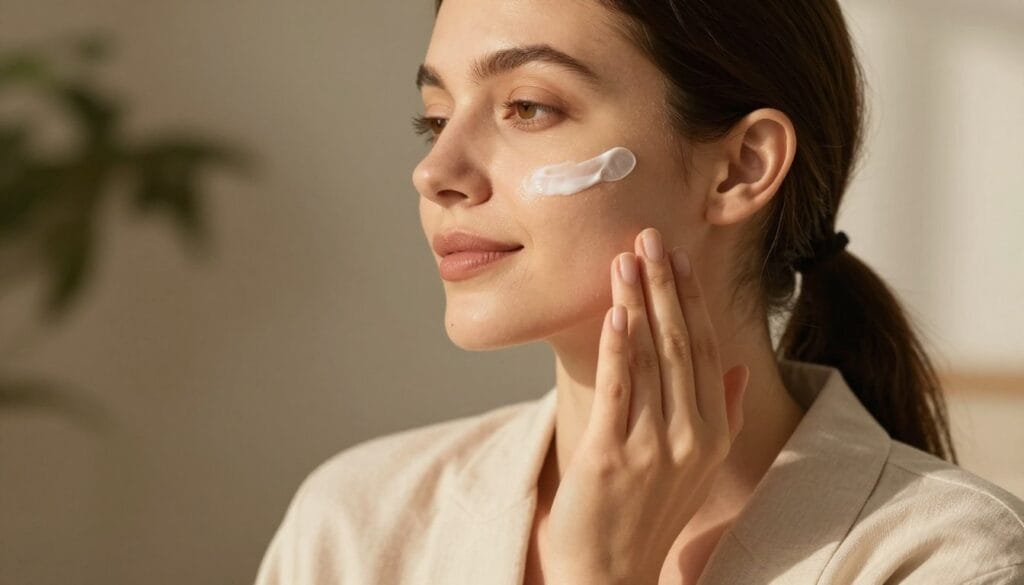
Natural formulas can do some things well. They often make your skin feel soft and comfortable quickly. They might also include ingredients like aloe vera and oatmeal, which are good for a simple skincare routine.
But “natural” doesn’t always mean “non-irritating.” Plant oils and fragrant extracts can cause irritation, redness, or bumps if you’re sensitive. Whether you choose a natural lotion or a hydrating cream, it’s important to consider preservatives and packaging for safety and longevity.
Instead of just looking at labels, listen to your skin. Try a new natural lotion for two to four weeks. Look for comfort, smoother skin, and fewer breakouts. If you’re using a cream, watch for clogged pores, too much shine, or makeup that slides off.
Being practical helps you stay in charge:
- Look for transparency in the ingredient list and a clear scent source (or none at all).
- Patch test along the jawline for a few nights before full-face use.
- Don’t equate price with performance; “clean” doesn’t always mean better.
| What you’re checking | Natural daily face lotion: what it often delivers | Hydrating face cream: what it often delivers | What to watch for |
|---|---|---|---|
| Comfort on application | Light, cushiony feel with quick softness | Richer, more protective feel | Stinging from fragrant botanicals or essential oils |
| Barrier support | Can be supportive when paired with gentle humectants and mild emollients | Often stronger support when it includes ceramides and occlusive helpers | Dry patches that return within hours, or tightness after cleansing |
| Breakout risk | Varies widely; some oils can be too heavy for acne-prone skin | Can clog if too rich for your climate or skin type | New bumps on the chin, cheeks, or along the hairline |
| Stability and safety | Depends on the preservation system and packaging | Often more stable in jars or tubes, depending on the formula | Short shelf life, odd odor changes, or texture separation |
Non-Greasy Moisturizer Performance Under Sunscreen and Makeup
If your base starts to “ball up,” it’s not your fault. Pilling is often just a mix-up of layers, not a skin problem. A lightweight face moisturizer can help your sunscreen and makeup blend smoothly, but only if they get along.
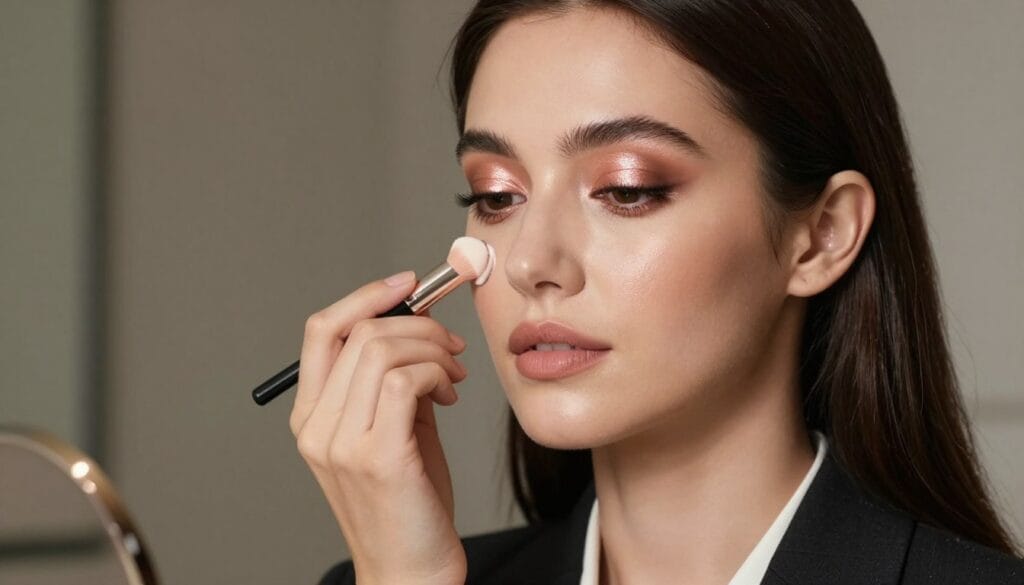
How to prevent pilling with SPF and primer
Pilling can happen when you use too much product or mix formulas that don’t mix well. It’s also common when you rub your skin while the layers are setting. The hairline, sides of the nose, and jaw are usually the trouble spots because they get rubbed a lot.
- Use thin layers—more product usually means more rolling.
- Press and smooth, don’t scrub, around textured areas.
- If your primer is very silicone-heavy, keep your non-greasy moisturizer light and fully absorbed first.
Wait times and layering order for best results
Most routines work best in this order: cleanse → treat (serum) → non-greasy moisturizer → sunscreen → makeup. If your sunscreen feels like a moisturizer, you might only need a little moisturizer underneath, or none at all.
| Morning step | What to do | Real-life wait time |
|---|---|---|
| Moisturizer | Apply a lightweight face moisturizer in a thin, even layer; press it into the skin. | 30–60 seconds before SPF |
| Sunscreen | Pat on generously, then smooth once; avoid reworking the same spot. | 1–2 minutes before makeup |
| Makeup | Start with a light hand; build coverage where you need it. | Extra 2–3 minutes if you pill easily |
Even a short pause between moisturizer and SPF can make a big difference. If you’re prone to pilling or layering multiple serums, give each step a bit more time to settle.
Choosing a lightweight face moisturizer for dewy vs. matte looks
Choose your finish on purpose, so your makeup looks like a choice, not a compromise. The right non-greasy moisturizer can give comfort without turning into shine by noon.
- Dewey: Look for hydrating slip and a soft, light-reflecting feel without oiliness. Pair with a radiant concealer where you want brightness.
- Matte: Choose quick-set, oil-free textures and keep glow targeted—think high points of the face, not an all-over slick base.
How to Apply a Daily Facial Moisturizer for Maximum Hydration
Make a simple change: apply your daily facial moisturizer to slightly damp skin. After cleansing or a hydrating mist, the moisture helps humectants hold water. This makes your skin feel comfortable without needing more product.
If you tend to over-apply, this step helps you stop at just the right amount. It also ensures your moisturizer spreads evenly. This is important when you’re layering sunscreen and makeup.
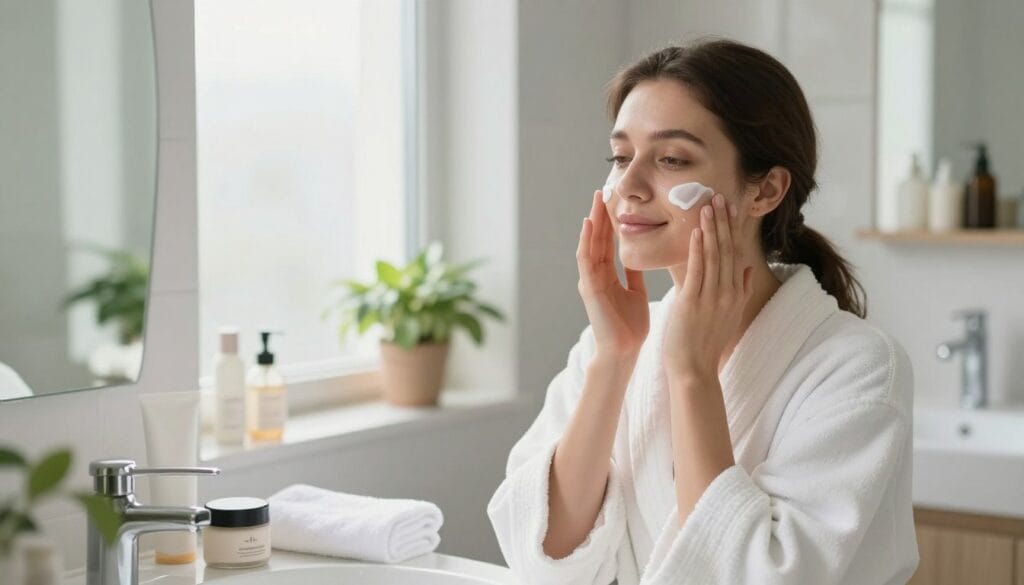
Begin with a small amount, like a pea or blueberry, based on your face size and texture. Warm it in your fingers for a few seconds. Then, apply it to your cheeks first.
Add more only where you feel tightness. This is key for the T-zone if it gets shiny, but your cheeks are dry.
Technique is more important than quantity. Press and smooth outward, then blend the edges lightly. Avoid aggressive rubbing, which can irritate your skin and cause the product to ball up under SPF or foundation.
- Press into cheeks and jawline first for comfort and cushion.
- Smooth outward from the center of the face to help create an even layer.
- Use the least product on acne-prone areas if you clog easily.
Don’t forget areas that show dryness early, like the nose, mouth corners, between the brows, and along the jawline. A thin layer of moisturizer in these spots can keep your skin calm and balanced all day.
If you use sunscreen and makeup, let your moisturizer absorb for a minute or two. You want your skin to feel soft, not slick. This ensures your SPF spreads evenly and your makeup sits smoothly.
| Step | What You Do | Why It Helps |
|---|---|---|
| Prep | Leave skin slightly damp after cleansing or misting | Supports hydration and reduces the urge to over-apply |
| Amount | Start small, warm between fingers, and add only where needed | Prevents heaviness and keeps the finish comfortable |
| Application | Press and smooth outward; avoid hard rubbing | Limits pilling and helps the layer sit evenly |
| Detail zones | Tap around the nose, mouth corners, brows, and jawline | Targets common dry patches without overloading the whole face |
| Layering | Wait briefly before sunscreen and makeup | Helps SPF glide and makeup look more seamless |
Day vs. Night: When a Lightweight Face Moisturizer Is Enough
During the day, your skin needs to work with sunscreen and makeup. Texture is as important as hydration. At night, your skin focuses on recovery, thanks to active ingredients. A lightweight daily moisturizer can meet both needs if your skin feels calm and balanced.
If you wake up with no shine, no tightness, and no flakes, keep it simple. For normal-to-oily skin, humid weather, or low-stress days, an oil-free moisturizer at night is ideal. It keeps your skin hydrated without feeling coated.
| Skin moment | Day approach | Night approach |
|---|---|---|
| Balanced, no irritation | Lightweight daily moisturizer, then SPF for smooth layering | Oil-free moisturizer alone for breathable comfort |
| Dry patches around the nose or chin | Light layer, avoid over-applying under makeup | Lightweight daily moisturizer plus a thin, richer cream only on dry zones |
| After retinoids or exfoliation | Gentle hydration, skip “tingly” products before SPF | Barrier-focused routine: oil-free moisturizer over a hydrator, then spot-occlusive where needed |
What to use when you need more than an oil-free moisturizer
When your skin feels tight, rough, or easily flushed, you might need more than an oil-free moisturizer. Instead of using a heavy layer everywhere, aim for targeted comfort that’s breathable.
- Switch the base: choose a barrier-supportive formula with ceramides or niacinamide when dryness shows up.
- Zone treat: add a thin layer of richer cream only on the cheeks or around the mouth.
- Hydrate first: apply a gentle hydrating serum underneath, then seal with your lightweight daily moisturizer.
Adjusting hydration after retinoids, acids, or exfoliation
Active nights can make your skin more sensitive, even if you don’t see peeling right away. This is a sign to prioritize comfort and barrier support, not intensity. If a product stings, it’s not “working”—it’s often a cue to simplify.
Try using your lightweight daily moisturizer as a buffer before retinoids, or apply it right after to reduce dryness. On exfoliation nights, keep the rest of the routine calm and skip extra activities.
Nighttime add-ons that keep the texture breathable
If you want to wake up softer without feeling greasy, think in thin layers. A hydrating serum can add water-based bounce, while your oil-free moisturizer keeps the finish light. For flaky spots, a targeted balm or a small occlusive step on the corners of the nose or lips can help without smothering your whole face.
The goal is a routine that feels easy to wear—so your skin stays comfortable through the night, and your daytime layers sit smoothly.
Common Mistakes That Make a Hydrating Face Cream Feel Heavy
Feeling tight on your skin can make you think it’s the cream’s fault. But it’s often simple fixes that make a hydrating face cream feel thick. It’s more about how you apply and layer it.
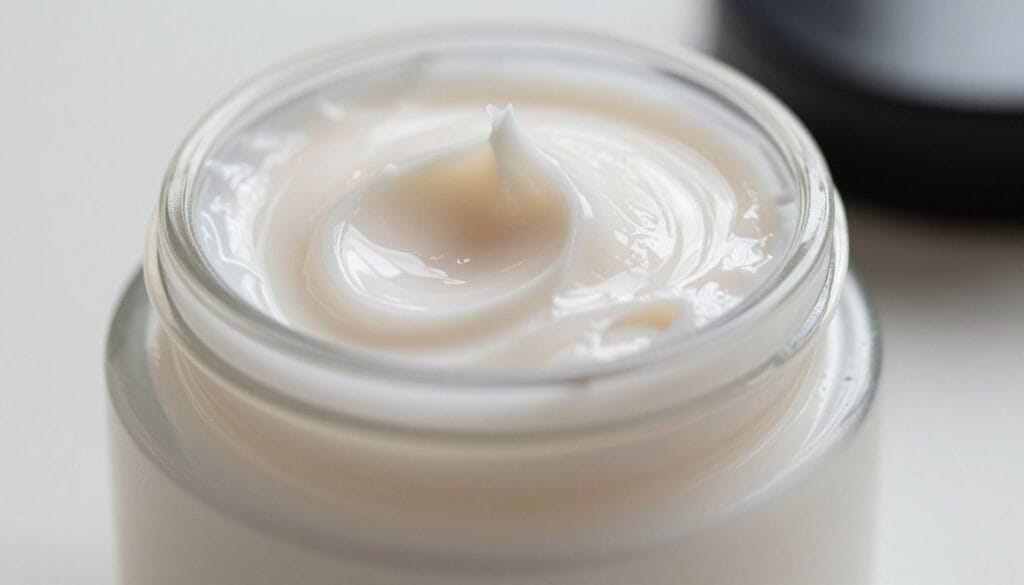
Using too much product or applying it to dry skin
Over-applying is a common mistake, usually because your face feels dry. Putting on too much makes it feel even heavier.
Try applying your daily hydrating moisturizer to slightly damp skin instead. Humectant-rich textures can feel tacky on dry skin. A smaller amount and better balance usually feel smoother.
Mixing incompatible layers (silicones, oils, SPF)
Layering can also cause problems. Stacking silicone-heavy steps can make a cream pill instead of absorbing. Adding facial oil under SPF can disrupt the sunscreen’s film.
If your sunscreen is film-forming, a rich moisturizer underneath might be too much. You’ll see rolling, balling, or a slick finish that never dries.
| Routine move | What it can feel like | Simple adjustment |
|---|---|---|
| Thick layer of daily hydrating moisturizer when skin feels tight | Heavy, sticky makeup separates | Use less on damp skin; build in thin layers only where needed |
| Silicone primer + silicone serum + hydrating face cream | Pilling, “rubber eraser” flakes | Cut one silicone step or let each layer set before the next |
| Facial oil under sunscreen | SPF slides, shiny patches | Skip oil in the morning or save it for the night |
| Rich cream under a film-forming SPF | Rolling never fully dries | Switch to a lighter daily hydrating moisturizer or apply less in the T-zone |
Ignoring climate, hormones, and skin-barrier changes
Your skin can change a lot. Humidity, winter, hormones, and stress can all affect how your moisturizer feels.
Barrier strain is important, too. Over-cleansing or exfoliating can make skin tight. Even a light cream can feel heavy then.
If everything feels heavy, try a reset. Use cleanser, moisturizer, and SPF for a few days. Then, add treatments back one at a time to find the problem.
What to Look for on the Label of an Oil-Free Moisturizing Lotion
Reading the front label can save you from trial-and-error. Look for words like fast-absorbing, oil-free, and non-greasy. These words tell you if the lotion will keep your skin feeling fresh all day.
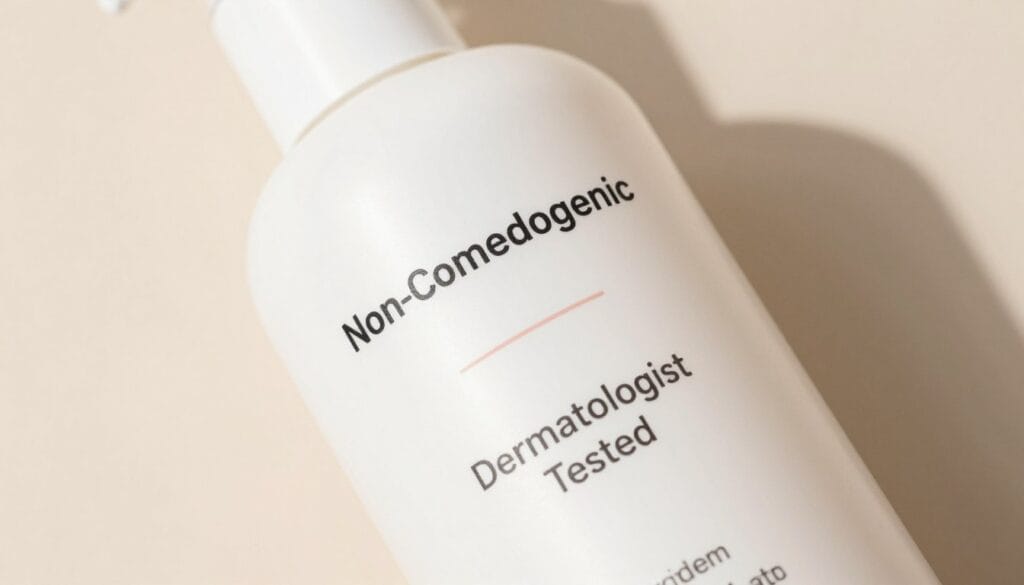
Understanding what “oil-free” means is key. Many lotions use silicones or emollients for a smooth feel. This way, an oil-free lotion can feel light and not dry.
Next, look for ingredient families instead of every single plant extract. Humectants like glycerin or hyaluronic acid help keep your skin hydrated. If your skin gets red easily, choose lotions with ceramides and niacinamide for better skin protection.
- Hydration cues: glycerin, hyaluronic acid, panthenol
- Barrier cues: ceramides, niacinamide, cholesterol
- Calming cues: allantoin, colloidal oatmeal, aloe
Claims on the label are helpful but not always true. Look for “non-comedogenic” and “dermatologist-tested” labels. But breakouts can happen even with these labels. If you have acne, choose a lotion with simple ingredients.
Think about how the lotion layers with your other products. A good oil-free lotion should work well under sunscreen and makeup. It should not pill or feel sticky. The right lotion is one you’ll use every day.
| Label phrase you’ll see | What it usually signals | Why it matters for daily wear | Best match if you want |
|---|---|---|---|
| Oil-free | No added plant oils; may use silicones or lightweight emollients for glide | Can reduce heavy shine while keeping the spread smooth | An oil-free moisturizing lotion that feels light but not stripped |
| Fast-absorbing | Quicker dry-down and less tack from the base formula | Helps makeup sit better and cuts down on the slippery layering | A non-greasy moisturizer for mornings and humid days |
| Non-greasy | Designed for a cleaner finish, often with a less occlusive feel | Comfortable under SPF, less likely to feel slick by midday | A non-greasy moisturizer that stays breathable |
| Non-comedogenic | Tested to be less likely to clog pores for many people | Helpful clue, but results vary by routine and skin | An oil-free moisturizing lotion if you’re managing breakouts |
| Fragrance-free / for sensitive skin | Usually fewer scent additives; may focus on gentler support ingredients | Can lower the chance of stinging or flushing | A non-greasy moisturizer when your skin is reactive |
Conclusion
Breathable hydration means your skin feels comfy all day. It looks steady, not shiny or tight. You want support without feeling weighed down, so you can move freely.
When shopping, remember three key things. Look for a texture that fits your lifestyle, ingredients that keep water in and protect your skin, and a finish that works with SPF and makeup. A good lightweight moisturizer should blend in quickly and stay flexible.
A hydrating face cream can also be light if it’s well-balanced. Your skin needs more cushion sometimes.
Trust what you see in the mirror. If your skin looks smooth, feels calm, and your makeup looks better, you’ve found the right product. The right moisturizer won’t get in the way; it will enhance your routine.
You don’t need many products to look radiant. Choose one hydrating face cream or moisturizer that fits your needs. Adjust the texture as your skin changes, not your confidence.