




If you’ve ever bought a “great” product but felt unsure, you’re not alone. This guide offers a clear, skin-type-specific way to use azelaic acid serum. You won’t need to guess or follow a 10-step routine.
- What Azelaic Acid Is and Why Women Use It
- Azelaic acid for skin: what it does and how it works
- Who can benefit most from azelaic acid in a daily skincare routine
- Common skin concerns it targets: acne, redness, uneven tone, texture
- Azelaic Acid Serum Benefits You Can Expect
- Clears and prevents breakouts for acne-prone skin
- Helps calm visible redness and irritation
- Brightens the look of dark spots and uneven tone
- Supports smoother-looking texture and refined pores
- Azelaic Acid Serum Ingredients: What to Look For on Labels
- Common concentrations and what they mean
- Supportive ingredients that pair well (niacinamide, ceramides, panthenol)
- Ingredients to be cautious with depending on sensitivity
- How to Patch Test and Start Slowly Without Irritation
- How to Apply Azelaic Acid Serum the Right Way
- Best order of application in your routine (cleanse, treat, moisturize, SPF)
- How much to use and where to apply (full face vs. targeted areas)
- Hydrating after serum: locking in moisture to reduce dryness
- Using Azelaic Acid in a Daily Skincare Routine
- Morning vs. night use: how to decide
- How often to apply when you’re new vs. experienced
- Sunscreen essentials for best results and fewer side effects
- Azelaic acid serum for acne: Best Practices for Breakout-Prone Skin
- How it helps active acne and clogged pores
- Spot treating vs. full-face use for recurring breakouts
- Pairing with acne actives (salicylic acid, benzoyl peroxide, retinoids)
- Azelaic acid serum for rosacea: Calming Redness and Sensitivity
- Signs your skin may be rosacea-prone vs. simply irritated
- How to introduce azelaic acid gently for flare-prone skin
- Barrier-first routine tips to keep redness under control
- Oily skin care: How to Use Azelaic Acid Serum Without Feeling Greasy
- Dry skin care: How to Use Azelaic Acid Serum Without Flaking
- Moisturizer strategies and hydrating layers
- How to reduce tightness: timing, buffering, and frequency
- Common mistakes that worsen dryness
- Sensitive skin care: Minimizing Stinging and Redness
- How to Combine Azelaic Acid With Other Products Safely
- Conclusion
Azelaic acid is like a reliable multitasker for your skin. It helps with clearer pores, a more even tone, and calmer redness. That’s why many women keep it in their daily skincare routine, even when other products change.
The key idea is simple: better results come from matching the formula, frequency, and pairings to your skin type and tolerance. It’s not about using the strongest azelaic acid serum as often as possible. It’s about using the right one, the right way, so your skin stays comfortable while it improves.
Next, you’ll learn what azelaic acid is, its benefits, and what to look for on ingredient labels. Then, we’ll cover patch testing, how to apply and layer it in a daily skincare routine. We’ll also show you how to tailor azelaic acid serum for different skin types. We’ll end with smart combo rules and a confident wrap-up.
What Azelaic Acid Is and Why Women Use It
Azelaic acid is a gentle, leave-on active that helps your skin look better. It’s found in serums and creams. It works quietly to clear pores, even out tone, and calm your skin.

Azelaic acid for skin: what it does and how it works
Azelaic acid is a multi-tasker for your skin. It reduces blemishes and their marks. It also helps with flushing and irritation.
Using azelaic acid serum regularly can lead to fewer bumps and less redness. It makes your skin smoother over time. It’s a long-term solution, which many people find appealing.
Who can benefit most from azelaic acid in a daily skincare routine
If you have acne but your skin gets dry or reacts to harsh products, azelaic acid is gentle. It’s great for those who want calm, balanced skin without constantly changing products.
It’s also good for uneven tone or dark spots. The benefits of azelaic acid serum are most noticeable with consistent use and a simple skincare routine.
Common skin concerns it targets: acne, redness, uneven tone, texture
Azelaic acid is used for acne, redness, uneven tone, and texture. It’s efficient for those with multiple concerns.
| Skin concern | What you may notice | How azelaic acid may help over time | How it can fit a daily skincare routine |
|---|---|---|---|
| Acne and clogged pores | Recurring breakouts, congested areas, post-blemish marks | Supports clearer-looking pores and helps reduce the look of blemishes | Use as a consistent treatment step after cleansing, then moisturize |
| Visible redness | Blotchiness, flushing, irritated-looking patches | Helps skin look calmer and more even | Pair with a gentle cleanser and a barrier-friendly moisturizer |
| Uneven tone and dark spots | Post-breakout marks, patchy tone, dull-looking areas | Supports a more even-looking tone with steady use | Keep the routine stable and add daily sunscreen in the morning |
| Rough-looking texture | Small bumps, uneven surface, makeup that doesn’t sit smoothly | Helps improve the look of smoothness and overall clarity | Apply on dry skin, then seal in comfort with moisturizer |
Real talk: the best azelaic acid serum benefits don’t come from pushing harder. They come from showing up regularly, keeping irritation low, and letting your skin adjust at its own pace.
Azelaic Acid Serum Benefits You Can Expect
Skin changes don’t happen overnight, and that’s good. Azelaic acid serum benefits build up over time. You’ll see improvements in tone, texture, and how often your skin feels irritated.
Don’t feel tempted to use too many products at once. Azelaic acid serum can do a lot with a simple routine. This makes it easier to stick to your skincare plan.
Clears and prevents breakouts for acne-prone skin
For acne-prone skin, the goal is to prevent more breakouts. Azelaic acid serum helps keep pores clear. It also reduces congestion around the chin, cheeks, and forehead.
Many women notice their breakouts are less angry over time. Their skin looks cleaner between outbreaks. This steady rhythm is a big benefit for acne-prone skin.
Helps calm visible redness and irritation
Some days, your skin can look flushed even without breakouts. Azelaic acid is great for calming this look. It works well on patchy redness or uneven warmth.
Azelaic acid serum benefits are quietly powerful. Your face looks more even. Makeup also sits better because your skin isn’t inflamed.
Brightens the look of dark spots and uneven tone
Post-acne marks can last long after the blemish is gone. Azelaic acid serum can help improve these marks. Your overall tone will look brighter and more balanced.
It’s like a gradual “soft focus” effect. It’s not about bleaching your skin. It’s about making old discoloration less noticeable over time. This is another big benefit for acne-prone skin.
Supports smoother-looking texture and refined pores
Texture looks worse when skin is congested or irritated. Azelaic acid serum makes your skin look smoother. It reduces bumpiness and makes pores less obvious when inflammation goes down.
If you want one ingredient for clarity, comfort, and a polished finish, azelaic acid serum is it. It works without a complicated routine.
| What you may notice | Why it happens | When it often shows up | Helpful routine habit |
|---|---|---|---|
| Fewer new blemishes and less visible congestion | Supports clearer-looking pores and a calmer breakout cycle | Often within a few weeks, with steady use | Apply to clean, dry skin and keep the rest of your routine simple |
| Less noticeable redness and a more even look | Helps skin look less reactive and irritated | May appear early, then builds with consistency | Moisturize after to support comfort and reduce dryness |
| Brighter-looking post-acne marks and uneven tone | Helps improve the look of discoloration left behind by breakouts | Typically takes several weeks of consistent use | Wear daily SPF to keep tone improvements from fading |
| Smoother-looking texture and refined pores | Refining support as congestion and inflammation settle | Gradual, especially when texture is tied to breakouts | Stick with a steady schedule instead of rotating many actives |
Azelaic Acid Serum Ingredients: What to Look For on Labels
When looking for azelaic acid serum, it’s not just about the numbers. It’s about finding a formula that your skin will love. Think of it like choosing a workout you can keep up with. For sensitive skin, the ingredient list is key to avoiding irritation.

Common concentrations and what they mean
Azelaic acid serums come in different percentages. The right one for you depends on your skin. If you’re new to actives or your skin gets red easily, start with lower percentages.
Higher percentages can be effective but need to be used carefully. This is true if you already use products for acne or exfoliation.
The label only tells part of the story. Texture, pH, and how the formula is delivered can affect how it feels. Always follow the brand’s instructions, as the same percentage can act differently in different formulas.
| Label range you’ll see | What it often feels like | Smart way to start |
|---|---|---|
| Lower percentage | Typically gentler, with less dryness risk | Use a few nights per week and watch for tightness or warmth |
| Mid-range percentage | More noticeable “active” feel on reactive areas | Build frequency slowly; moisturize right after |
| Higher percentage | Can be more potent but less forgiving when layered | Keep the rest of your routine simple and avoid stacking irritants |
Supportive ingredients that pair well (niacinamide, ceramides, panthenol)
When checking azelaic acid serum ingredients, look for supportive elements. Niacinamide helps with even tone and barrier health. Ceramides are great for dryness, which is important with multiple actives.
Panthenol is a good sign for sensitive skin. It helps your skin feel softer and more comfortable, making azelaic acid serums easier to use.
- Niacinamide: barrier support and a more balanced look
- Ceramides: help reinforce the moisture barrier and reduce rough patches
- Panthenol: promotes a soothed feel and less post-application tightness
Ingredients to be cautious with depending on sensitivity
If your skin is sensitive, watch out for fragrance and high denatured alcohol levels. They can make a good serum feel harsh. Always read the full list.
Also, think about what you’re using together. Too many strong exfoliants can dry out and irritate your skin. Retinoids and acne treatments might work, but choose wisely. You’re buying a whole experience for your skin.
How to Patch Test and Start Slowly Without Irritation
Adding azelaic acid serum to your skincare routine? Start with a patch test. It’s a smart move for anyone, even if you rarely react to new products. It saves you stress and protects your sensitive skin.
- Clean and dry a small, discreet spot, like along your jawline.
- Apply a thin layer of azelaic acid serum (about the size of a grain of rice).
- Leave it on as directed; don’t rinse unless the label says to.
- Watch the area for 24–48 hours before using it on your full face.

Watch for signs of irritation. Mild tingling or dryness might show up early. But burning, swelling, hives, or lasting redness means stop.
Start slow when you begin. Use it 2–3 nights a week or every other night. Increase only if your skin stays calm. This approach builds consistency without stressing your skin.
If you’re reactive, try buffering. Apply moisturizer first, then a small amount of azelaic acid serum. For the first few uses, keep your skincare simple by skipping other strong actives.
Going slow is not being cautious. It’s being skilled. You’re giving your skin time to adjust, so results come with fewer issues.
| What you notice | What it can mean | What to do next |
|---|---|---|
| Mild tingling that fades in a few minutes | Common adjustment, even early on | Keep frequency low (2–3 nights weekly) and moisturize well |
| Light, brief dryness or tightness | Barrier may need more support | Buffer over moisturizer and add a richer moisturizer after |
| Persistent redness lasting hours | Possible irritation or too much, too soon | Stop for a few days, restart less often, and use a smaller amount of azelaic acid serum |
| Burning, swelling, or a rash | Not a normal response | Wash off, discontinue use, and seek medical advice if symptoms are severe |
How to Apply Azelaic Acid Serum the Right Way
When your skin is upset, the steps you take are just as important as the product. Using azelaic acid serum gently helps you see results without irritation. It’s about building a reliable daily skincare routine.
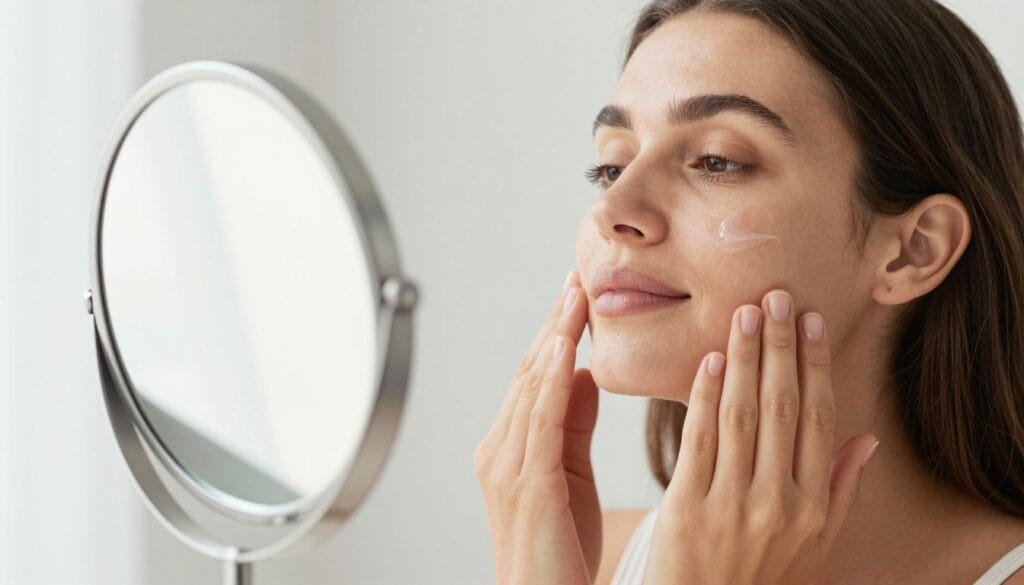
Best order of application in your routine (cleanse, treat, moisturize, SPF)
Begin with a gentle cleanse that won’t dry out your skin. Pat dry, then apply azelaic acid serum. If you’re sensitive, apply it to dry skin.
Next, moisturize to protect your skin. Finish with SPF in the morning. Sunscreen keeps your progress safe, helping with discoloration or marks.
How much to use and where to apply (full face vs. targeted areas)
Use a thin layer, about a pea-size for most faces. Too much can cause dryness and sensitivity. Apply smoothly to avoid irritation.
Apply it all over if you have redness or uneven tone everywhere. Use it on specific areas if you’re testing it or only have issues in certain spots.
| Skin goal | Where to apply | How much | What to watch for |
|---|---|---|---|
| Overall redness and uneven tone | Full face, avoiding eyes and lips | Thin layer (about pea-size) | Mild tingling that fades; persistent burn means scale back |
| Frequent breakouts across the face | Full face, focus on congested areas | Thin layer, no extra “spot glob” | Dry patches near corners of nose; moisturize sooner |
| Occasional flare-ups in one zone | Targeted areas (chin, cheeks, around the nose) | Half pea-size, spread lightly | Overlapping with other actives can trigger peeling |
| New user building tolerance | Targeted first, then expand if comfortable | Very thin layer | Tightness within minutes is a cue to add more moisture |
Hydrating after serum: locking in moisture to reduce dryness
Hydrating after serum is key for comfort, at least in the first few weeks. Apply moisturizer while your skin is calm. Let it sit before adding makeup or SPF. This step helps prevent flaking and keeps your skin smooth.
Use a simple rule: if your skin feels tight soon after, your moisturizer needs to be richer or applied sooner. When hydrating becomes second nature, azelaic acid serum becomes a part of your routine with less fuss.
Using Azelaic Acid in a Daily Skincare Routine
For steady progress without drama, keep your skincare simple and consistent. An azelaic acid serum fits well when your routine includes gentle cleanse, treatment, moisturizer, and daytime protection. Consistency is key to seeing benefits, as too many strong actives can be overwhelming.
Morning vs. night use: how to decide
Using azelaic acid serum in the morning can help with visible redness. Apply it to clean, dry skin, then moisturize and apply SPF. This helps your makeup look better and keeps your skin balanced.
At night, it’s easier if your mornings are busy or your skin is dry. Layer a richer moisturizer over the serum for better recovery while you sleep. This supports even tone and helps with post-breakout marks.
How often to apply when you’re new vs. experienced
Start with a few nights a week if you’re new. Watch for signs of irritation. If your skin is calm, gradually increase use until it feels natural.
If you’re experienced and your skin is okay, daily use might work. Just make sure your routine is gentle. Aim for steady progress, not pushing through irritation.
| Comfort level | Suggested timing | Weekly frequency | What to prioritize in your daily skincare routine |
|---|---|---|---|
| New or easily irritated | Night | 2–3 times | Moisturizer after azelaic acid serum; avoid layering multiple strong actives |
| Stable and adjusting well | Morning or night | 4–6 times | Even application, hydration, and keeping cleansing mild |
| Experienced and comfortable | Morning and/or night | Daily | Consistency, barrier support, and keeping exfoliation limited |
Sunscreen essentials for best results and fewer side effects
Daily SPF is key to protecting your progress, like fading uneven tone or marks. Sunscreen locks in azelaic acid serum benefits. Unprotected sun can make discoloration last longer.
Choose a broad-spectrum sunscreen you’ll wear. Use enough for your face and neck. Reapply when outdoors for long periods, even if your morning routine is complete.
For a drama-free routine, stick to azelaic acid serum, moisturizer, and SPF. A consistent plan avoids irritation and keeps results moving forward.
Azelaic acid serum for acne: Best Practices for Breakout-Prone Skin
If you have acne-prone skin, being consistent is key. Using an azelaic acid serum is a good choice. It helps keep your skin steady and reduces the look of pimples and pores.
How it helps active acne and clogged pores
Azelaic acid serum is great for clearer pores and calmer breakouts. It reduces redness and keeps your skin moist.
For clogged pores, azelaic acid serum is a gentle step. It helps your skin look even without peeling.
Spot treating vs. full-face use for recurring breakouts
Spot treating is good for the odd blemish or when starting azelaic acid serum. It’s also a smart choice if your skin is sensitive.
For recurring breakouts, use azelaic acid serum all over. It helps control congestion in areas like the chin and cheeks.
| Approach | Best fit | How to apply | Watch for |
|---|---|---|---|
| Spot treat | Occasional pimples, easing in, reactive skin | Use a thin layer on the blemish after cleansing; moisturize after | Dry patches if you “stack” too many layers in one area |
| Full-face | Recurring breakouts, patterned congestion, mixed texture | Apply a light, even layer over breakout-prone zones; finish with moisturizer | Tightness if you combine with too many strong actives at once |
Pairing with acne actives (salicylic acid, benzoyl peroxide, retinoids)
Pairing azelaic acid serum with other acne treatments is possible. But do it carefully. Too much can irritate your skin, causing stinging, flakes, or a burning sensation.
- Salicylic acid: If you’re oily or congestion-prone, try alternating days. If dryness shows up, reduce frequency before you add more exfoliation.
- Benzoyl peroxide: Effective, but it can be drying. Consider using it at a different time of day than azelaic acid serum, or alternate nights to keep irritation down.
- Retinoids: A strong long-term match, but introduce slowly. Avoid starting both a retinoid and azelaic acid serum at full frequency in the same week.
Listen to your skin. If it feels tight, flakes a lot, or stings when you wet it, slow down. Focus on gentle cleansing and moisturizing before you try again.
Azelaic acid serum for rosacea: Calming Redness and Sensitivity
If your skin flushes easily, feels hot, or stays pink long after you cleanse, you may be dealing with more than a short-lived reaction. Many women turn to azelaic acid serum for rosacea. It helps calm the skin without the harsh side effects of other products. It’s important to start slow and keep your routine consistent, which is key for sensitive skin care.
Signs your skin may be rosacea-prone vs. simply irritated
Rosacea-prone skin often shows a pattern: frequent flushing, persistent redness, and sensitivity that doesn’t fully fade even when you simplify. You might also notice visible warmth or stinging with products that used to feel fine.
Simple irritation, on the other hand, often improves fast when you pause exfoliants, cut fragrance, and stop over-cleansing. If a “rest week” helps a lot, your barrier may have been pushed too hard. Either way, azelaic acid for skin can be a helpful option when you introduce it with care.
| What you notice | More like rosacea-prone | More like temporary irritation |
|---|---|---|
| Redness pattern | Shows up often and lingers; flares with heat, stress, or skincare changes | Peaks after a new product or over-use; fades when you stop the trigger |
| Skin feel | Burning or warmth comes and goes, even on “simple” days | Tight, dry, or itchy; improves with gentle moisture and fewer steps |
| Best first move | Keep a consistent routine and track flare triggers | Remove strong actives and focus on barrier support for a week |
How to introduce azelaic acid gently for flare-prone skin
Start low and steady. Use azelaic acid serum for rosacea 1–3 nights a week, then build only if your skin stays comfortable. If stinging is common for you, try “buffering” by applying moisturizer first, then a thin layer of serum.
In the first few weeks, avoid stacking it with strong exfoliants. That means keeping scrubs, high-strength acids, and aggressive retinoids out of the same routine until you know how you react. This approach supports sensitive skin care without giving up progress.
Barrier-first routine tips to keep redness under control
Think of your foundation as three daily steps: a mild cleanser, a barrier-supporting moisturizer, and sunscreen. When your baseline is calm, azelaic acid for skin tends to feel easier to tolerate and more predictable.
Consistency matters more than constant product swapping. If your redness feels persistent, uncomfortable, or hard to manage, it can help to talk with a dermatologist so your skincare plan and medical options work side by side.
Oily skin care: How to Use Azelaic Acid Serum Without Feeling Greasy
Dealing with oily skin can be tough. It’s like fighting between too heavy and too harsh products. Azelaic acid serum is a good middle ground. It makes pores clearer and skin smoother without drying out.
When using azelaic acid serum, the right texture and timing are key. Choose a lightweight serum that absorbs quickly. Apply a thin layer and wait a minute for it to settle. This helps avoid a sticky feel and keeps your skin looking even.

Even oily skin needs moisturizer. Skipping it can lead to tight skin that then gets oily. Opt for a gel-cream or light lotion that hydrates without clogging pores.
Makeup and sunscreen can also affect your skin’s oiliness. Make sure each layer dries before adding the next. Choose a sunscreen that’s not too heavy to avoid a greasy look.
| Step | What to do | Why it helps oily skin |
|---|---|---|
| Cleanse | Use a gentle, low-foam cleanser and rinse well. | Removes buildup without over-stripping, which can make shine rebound. |
| Treat | Apply a thin layer of azelaic acid serum; wait 60 seconds. | Supports clearer-looking pores and smoother texture with less greasy feel. |
| Moisturize | Choose a gel-cream or light lotion; keep the layer sheer. | Hydrates to prevent the tight-then-oily cycle in your daily skincare routine. |
| Protect | Use a comfortable sunscreen and let it set before makeup. | Reduces midday slip and helps products wear evenly without pilling. |
Small cue that matters: if your skin feels greasy, use less product before switching. With oily skin, the right amount is often just a little. Azelaic acid serum helps a lot in this area.
Dry skin care: How to Use Azelaic Acid Serum Without Flaking
Dry skin can benefit from azelaic acid if your routine is gentle. The key is to keep the skin’s barrier intact while using the treatment. Choose azelaic acid serum ingredients that are gentle and add moisture, but not too much.

Moisturizer strategies and hydrating layers
Build your routine in layers: water, treatment, then moisturizer. If your skin feels tight, start with a hydrating step. Then, apply your azelaic acid serum, followed by a moisturizer rich in barriers.
Look at the ingredients in your azelaic acid serum. Choose a moisturizer with ceramides, panthenol, and glycerin. This combination can make your routine smoother and less harsh.
| Routine step | What it does for dryness | What to look for on labels | How it supports azelaic acid use |
|---|---|---|---|
| Gentle cleanse | Keeps oils from being stripped away | Non-foaming, fragrance-free, glycerin | Reduces irritation so azelaic acid is easier to tolerate |
| Hydrating layer | Adds water so skin feels less tight | Hyaluronic acid, panthenol, beta-glucan | Creates slip and comfort before treatment |
| Azelaic acid serum | Targets tone, texture, and breakouts without heavy oil | Simple azelaic acid serum ingredients, fewer added acids, soothing base | Delivers results while keeping the routine predictable |
| Moisturizer | Seals in hydration and reduces flaking | Ceramides, squalane, dimethicone, panthenol | Makes hydrating after serum more effective and long-lasting |
How to reduce tightness: timing, buffering, and frequency
Start with azelaic acid a few nights a week and adjust as needed. Consistency is key in dry skin care, even when the air is dry or your skin is stressed.
Buffering helps: apply moisturizer first, then a thin layer of azelaic acid on top. Make sure to apply evenly and avoid applying to cracked or raw patches until they heal.
- Timing tip: wait a minute after cleansing so your skin isn’t damp and reactive.
- Comfort tip: prioritize hydrating after serum every time you use actives.
- Frequency tip: increase slowly only if your skin stays calm for two weeks.
Common mistakes that worsen dryness
Using too much, too often, or too soon can lead to flakes. A pea-sized amount is usually enough for the face. More product won’t speed up results and can stress your skin.
Another mistake is stacking too many strong steps in one night. If your azelaic acid serum is already doing a lot, adding extra exfoliating acids can cause peeling.
Lastly, be careful with your cleanse. Hot water and harsh foaming cleansers can strip the barrier before treatment, making dryness worse, even with a good moisturizer.
Sensitive skin care: Minimizing Stinging and Redness
If your face stings easily, it’s not because you’re doing something wrong. Sensitive skin care is about moving slowly and carefully, like when you start using an azelaic acid serum.
Many people feel a brief tingle at first. The goal is to make your skin comfortable and progress slowly. This way, you can enjoy the benefits of azelaic acid serum without pushing your skin too hard.

To reduce stinging, start with fewer nights per week and gradually increase. Apply your azelaic acid serum on fully dry skin. This helps because damp skin can make the actives feel sharper.
If areas around the nose or mouth react quickly, try “buffering.” Apply moisturizer first in those spots, then put the azelaic acid serum on the rest of your face.
- Start low, go slow: use it 2–3 times per week, then add a day as your skin settles.
- Dry-skin application: wait a few minutes after cleansing before you apply.
- Buffer smart: moisturize first on high-sensitivity zones, then treat.
A calm routine makes sensitive skin care easier. Avoid fragrance, harsh scrubs, and “everything showers” for your face. These can be too strong.
Keep two steps consistent: a gentle cleanser and a barrier-support moisturizer. Let your azelaic acid serum do the work, instead of competing with too many actives.
| Common trigger | What it can feel like | Calmer swap |
|---|---|---|
| Fragranced cleanser or toner | Tightness, burning during application | Fragrance-free gentle cleanser + lukewarm rinse |
| Scrubs and rough cleansing tools | Stinging that lingers, patchy redness | Soft washcloth used lightly, or hands only |
| Layering strong actives in one routine | Hot sensation, increased sensitivity over days | Alternate nights and keep one “active” at a time |
| Skipping moisturizer after treatment | Dry, scratchy feel by midday | Barrier cream with ceramides after azelaic acid serum |
Watch for patterns, not just one moment of tingling. If redness builds day after day, or your skin feels hot, raw, or persistently uncomfortable, pause and simplify until it feels steady again.
With sensitive skin care, the goal is a calm, even look over time. When you’re gentle, the azelaic acid serum benefits tend to show up with less drama.
How to Combine Azelaic Acid With Other Products Safely
Mixing skincare products can be tricky, but it gets easier with practice. Start with azelaic acid serum as your base. Then, add gentle products to your daily routine.

Focus on comfort first, then results. This is key, especially if your skin tends to dry out. Use a hydrating after serum to keep your skin soft.
What pairs well
Vitamin C can brighten your skin, while azelaic acid helps with clarity. If you flush easily, use Vitamin C in the morning and azelaic acid at night.
Hyaluronic acid is easy to add because it adds moisture and softness. It’s great for hydrating after serum, helping when air is dry, or you’ve over-cleansed.
Niacinamide and peptides are good additions. They support a strong barrier and healthy texture without irritating.
What to separate by time of day
Don’t mix too many strong products at once. This can irritate your skin. Instead, use azelaic acid at night and keep mornings simple.
For many, mornings are for basic care (cleanse, hydrate, SPF). Nights are for treatments like azelaic acid.
When to simplify and support your barrier
If your skin stings, peels, or flushes a lot, slow down. For a few days, stick to a simple routine. Use cleanser, moisturizer, SPF, and azelaic acid serum.
If even that’s too much, take a break. Focus on comfort. When your skin is calm again, add products one at a time to see what works.
| Product type | How it fits with azelaic acid serum | Best timing | Comfort tip |
|---|---|---|---|
| Vitamin C | Supports a brighter-looking tone; can feel too active when layered with other strong steps | Morning (if tolerated), with SPF | If sensitivity pops up, move azelaic acid to night and keep the morning routine minimal |
| Hyaluronic acid | Boosts hydration and helps reduce tightness around treatment areas | Morning or night | Apply on slightly damp skin, then focus on hydrating after the serum with a moisturizer |
| Niacinamide | Barrier-friendly support that layers well for many skin types | Morning or night | If you’re new, keep the rest of your daily skincare routine simple for a week |
| Peptides | Gentle pairing that supports a smooth, resilient look without extra sting | Usually best at night, but flexible | Use a fragrance-free moisturizer on top to reduce dryness and keep skin comfortable |
| Strong exfoliating acids or retinoids | Can raise the risk of dryness and irritation when stacked with multiple actives | Alternate nights or separate routines | When in doubt, reduce frequency first before adding more products |
Conclusion
Azelaic acid serum is a versatile addition to your skincare routine. It helps with fewer breakouts, a calmer look, and a more even tone. Used correctly, it supports clear, comfortable skin that’s truly you.
For the best results, start with a strength your skin can handle. Look for supportive ingredients and always patch test first. Begin slowly, moisturize well, and apply sunscreen every morning to protect your progress.
Remember, you’re not aiming for perfect skin. You’re building a routine that suits your life. With regular use, azelaic acid serum can make your skin smoother, more balanced, and resilient.
If you’re looking for reliable options, consider Paula’s Choice, The Ordinary, or Naturium. They offer azelaic acid serum in various textures. This way, you can pick what feels best on your skin, whether for acne or rosacea.