




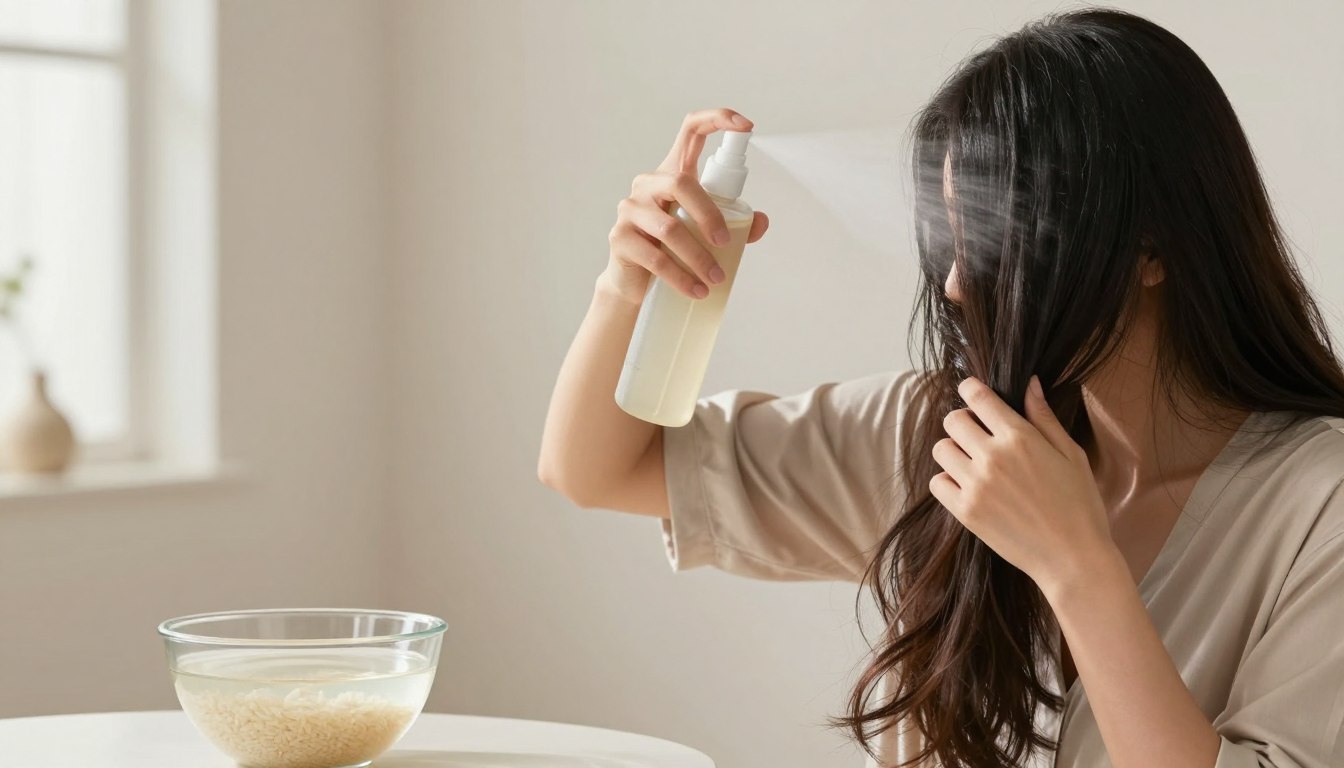
Some weeks, your hair doesn’t need a big change. It just needs a simple, calming ritual. Rice water hair care is perfect for this.
- Why rice water is trending in modern women’s hair care
- From beauty tradition to lifestyle upgrade
- What makes rice water different from typical hair products
- Who benefits most from adding rice water to a routine
- What rice water is and how it supports healthier hair
- Key nutrients in rice water and what they do for strands
- The role of inositol in smoother-feeling hair
- How rice water interacts with the scalp and hair cuticles
- Benefits of rice water for hair: what women can realistically expect
- Improved shine, softness, and manageability
- Breakage reduction vs. true growth expectations
- Scalp comfort and the look of healthier hair over time
- Choosing the best rice type for rice water hair treatment
- White rice vs. brown rice vs. jasmine vs. basmati
- Organic vs. conventional rice considerations
- What to avoid if your scalp is sensitive
- How to make rice water at home for hair care
- Soaked rice water method for quick prep
- The boiled rice water method for a more concentrated rinse
- Fermented rice water method and what “fermented” changes
- Storage, freshness, and safe-use tips
- Rice water hair care routine for busy women
- Weekly schedule options for different lifestyles
- How to layer rice water with shampoo, conditioner, and leave-ins
- How long to leave rice water on hair without overdoing it
- How to use a rice water hair rinse for shiny hair
- Step-by-step rinse routine in the shower
- Rinse-out vs. leave-on approaches
- Tips for maximizing rice water for shiny hair without residue
- DIY rice water hair mask ideas for softness and hydration
- Rice water + aloe vera mask for lightweight moisture
- Rice water + honey mask for dry hair
- Rice water + yogurt mask for smoother-looking strands
- How to rinse masks cleanly to avoid buildup
- Rice water for hair growth: supportive habits to pair with treatments
- Scalp massage techniques to complement rice water
- Protective styles and low-manipulation routines
- Nutrition and hydration basics that support growth goals
- Rice water for hair loss: what it can and can’t do
- Rice water for damaged hair: repair-focused tips and best practices
- How rice water helps the look and feel of overprocessed hair
- Best pairings with bond-building or protein treatments
- Heat styling adjustments to reduce future damage
- Common mistakes with rice water hair care and how to avoid them
- Using rice water too often and causing stiffness
- Skipping patch tests and ignoring scalp reactions
- Not diluting concentrated rice water hair treatment
- Improper storage that leads to unpleasant odor or irritation
- Conclusion
This guide will teach you about rice water, its hair benefits, and how to make it at home. You’ll learn how to fit it into your hair care routine, no matter how often you wash your hair.
Rice water hair care is easy to add to your routine. You can use it as a quick rinse, a softening mask, or for scalp care. The best way depends on your hair type and how you style it.
Using rice water wisely is key. The right amount, timing, and frequency can prevent stiffness or buildup. With a few simple rules, rice water can be a great addition to your hair care, not a hassle.
Why rice water is trending in modern women’s hair care
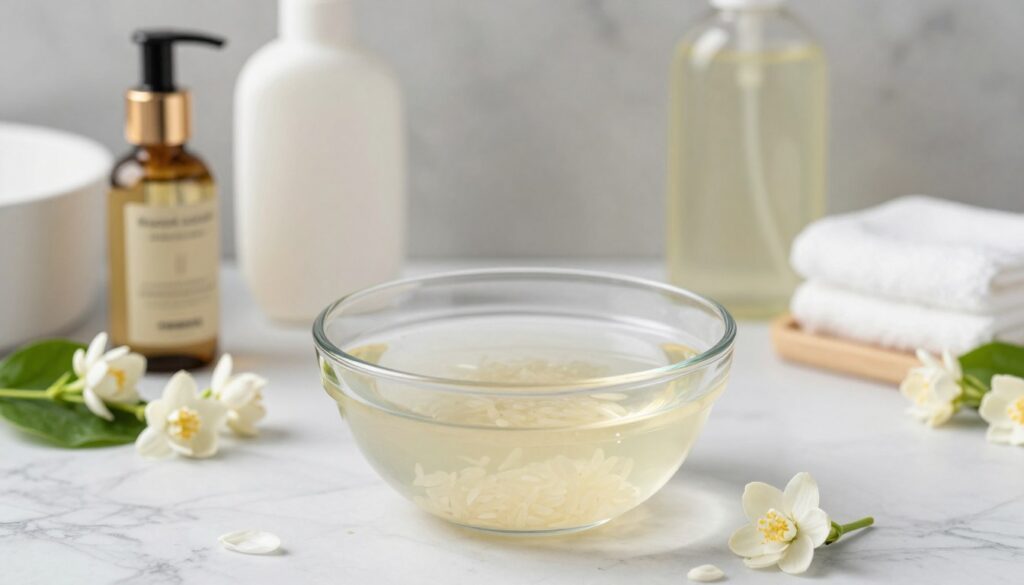
Rice water is becoming popular because it offers real results without fuss. It’s perfect for those who prefer simple, ingredient-focused hair care. Making rice water is easy, and it adds a special touch to your shower routine.

From beauty tradition to lifestyle upgrade
Rice water has been a hair care staple for ages. Now, it’s seen as a weekly reset. It pairs well with scalp care and low-stress styling, making it a thoughtful habit for many.
What makes rice water different from typical hair products
It’s not a quick fix for shine, and it won’t replace your conditioner. Instead, it acts as a lightweight treatment. It can make your hair feel smoother and look cleaner than heavy oils.
Who benefits most from adding rice water to a routine
This rinse works best when you have clear goals and a consistent routine. It’s most beneficial for those aiming for light, smooth, and manageable hair.
- You want more shine and smoother-looking strands without greasy buildup.
- You’re managing breakage and want stronger-looking hair over time.
- You heat style or color your hair and want a gentler support step with realistic expectations.
Rice water isn’t always better than salon products. Its benefits depend on your hair type, frequency of use, and what you already use.
What rice water is and how it supports healthier hair
Rice water is the cloudy liquid left after soaking or boiling rice. It coats hair for better slip, making detangling easier. It’s a simple rinse that makes hair look and feel healthier, but it’s not a permanent fix.
Key nutrients in rice water and what they do for strands
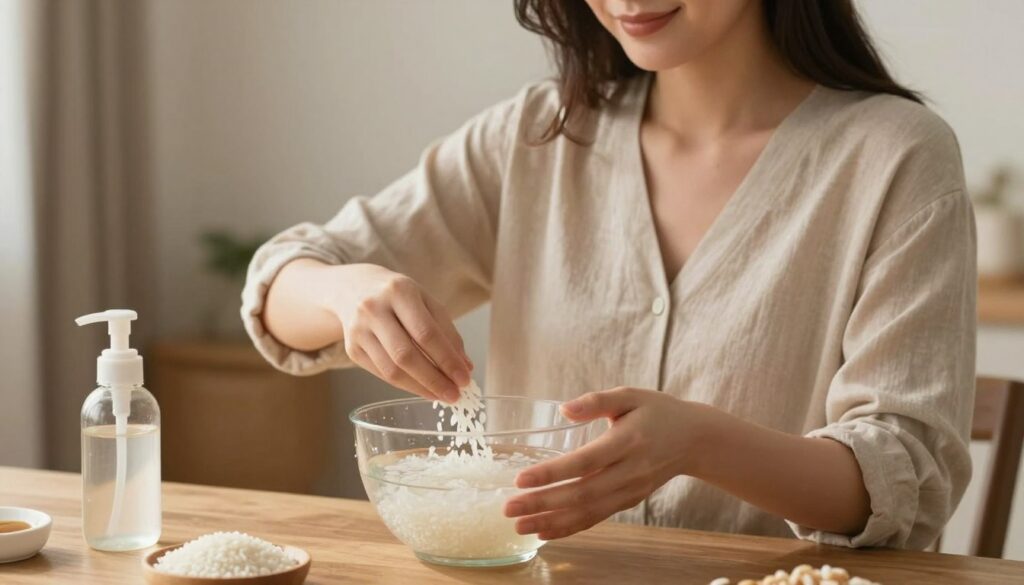
Rice water contains dissolved starches, proteins, amino acids, vitamins, and minerals. These nutrients don’t rebuild hair from the inside. But they leave a fine film that makes hair feel softer and look more even.
- Carbohydrates (starches): add slip and a smoother feel during comb-through.
- Trace proteins and amino acids: can help hair feel a touch stronger to the hand, even on rough ends.
- Vitamins and minerals: present in small amounts and vary by method, adding to the “conditioned” finish.
The role of inositol in smoother-feeling hair
Inositol, a carbohydrate-like compound in rice, makes hair feel silky. It’s the reason hair feels polished instead of scratchy. This makes styling easier.
Running your fingers down a strand and feeling little snags? Rice water can help. It improves texture and manageability, making a big difference in daily hair behavior.
How rice water interacts with the scalp and hair cuticles
The cuticle is the outer layer of your hair. A rice water treatment can smooth it, making hair shinier and easier to detangle. With regular use, you’ll notice your hair looks and feels better.
Your scalp is skin, so it needs to be comfortable. Rice water should feel clean and soothing, never itchy or tight. Always dilute it and use fresh water to keep your scalp calm.
Benefits of rice water for hair: what women can realistically expect
Trying something new means knowing what to expect. Rice water can make your hair shine, move better, and style more easily.
Look for small improvements you can see and feel. Rice water is a simple, easy step to add to your hair care.
Improved shine, softness, and manageability
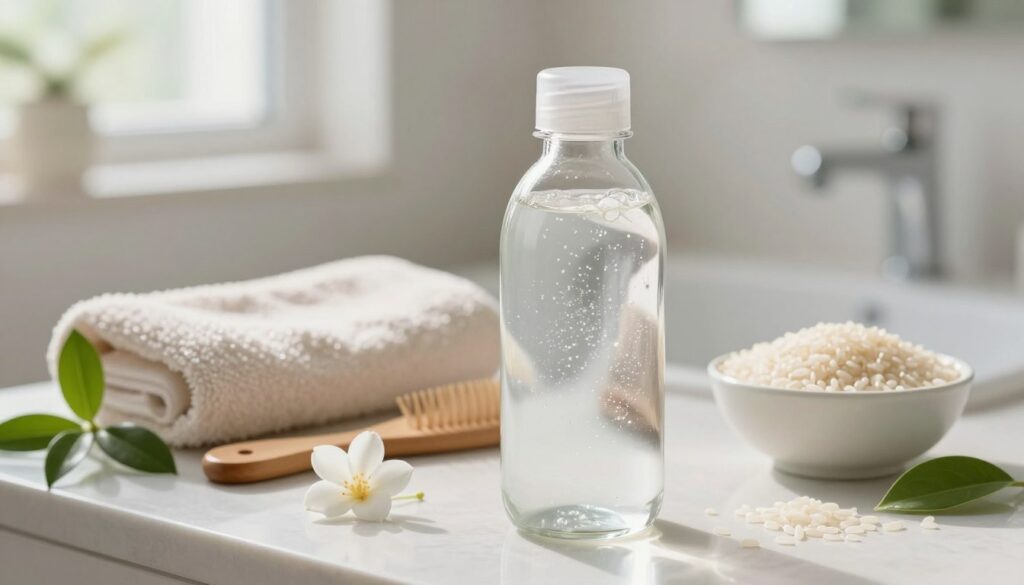
A diluted rinse can make your hair look brighter and feel silkier. It’s great for those with rough ends.
It also makes hair easier to manage. You’ll notice less tugging and fewer tangles.
Breakage reduction vs. true growth expectations
Rice water helps keep your hair from breaking off. This means you keep more of your hair length.
It doesn’t make your hair grow longer. But it can make your ponytail fuller, and your ends look better.
Scalp comfort and the look of healthier hair over time
A fresh rinse can feel clean and light on your scalp. Start slow if your skin is sensitive.
Shine comes quickly, but a healthier look takes time and gentle care. Track changes between wash days:
- Detangling time (does it get easier?)
- Shedding vs. breakage (do you see short snapped pieces?)
- Day two and day three feel (soft or stiff, smooth or frizzy?)
These signs tell you more than a photo. They help you adjust your rice water use without overdoing it.
Choosing the best rice type for rice water hair treatment
Choosing the right rice for your hair care routine is key. Lighter rice gives a cleaner finish, while starchier rice can feel more coating. Start with one type, use it for a week, and see how your hair responds.
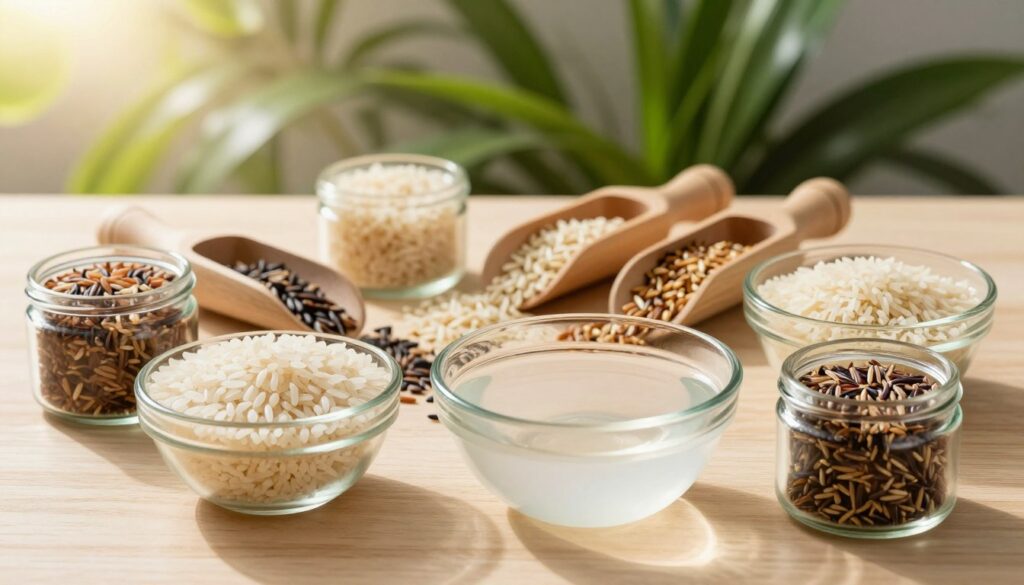
White rice vs. brown rice vs. jasmine vs. basmati
White rice is a good starting point. It makes a light rinse that’s less likely to leave residue. This is great if your hair gets weighed down easily.
Brown rice is richer because it releases more starch. This is good for thicker hair, but fine hair might need more dilution to avoid stiffness.
Jasmine and basmati are similar to white rice. What really matters is your hair type and how you mix it, not the rice type.
- If your roots get oily, use lighter rice and dilute more.
- If your lengths feel rough, try a richer mix and rinse well.
Organic vs. conventional rice considerations
Organic rice might seem cleaner, but the details matter more. Rinse the grains until the water is clear. Use a clean bowl and jar, and avoid rice with added seasonings.
Choose what fits your budget and comfort level. A simple routine is often more effective than searching for the perfect product.
What to avoid if your scalp is sensitive
If your scalp is sensitive, start slowly. Avoid strongly fermented batches and overly concentrated mixes. Don’t add essential oils or fragrances if they’ve caused issues before.
- Patch test behind your ear or along the hairline.
- Keep contact time short in week one, then adjust slowly.
- If you feel itching or tightness, rinse out right away and dilute more next time.
How to make rice water at home for hair care
Making rice water at home is easy. It lets you adjust its strength, smell, and how it feels on your scalp. This way, a rice water hair rinse can fit into your daily life without hassle.
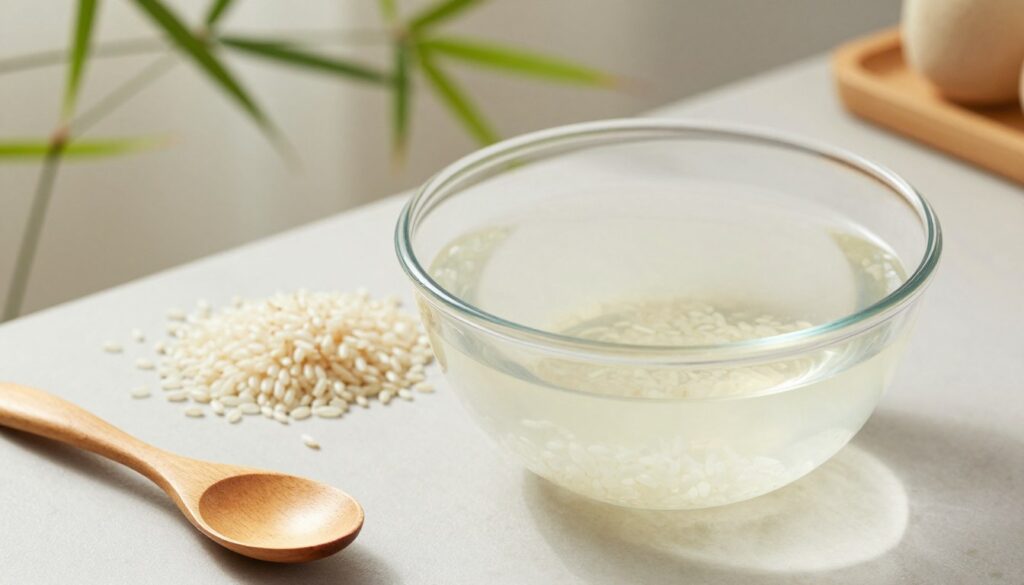
Soaked rice water method for quick prep
This method is great for a light rice water hair rinse. It won’t weigh your hair down.
- Rinse dry rice well until the water runs clearer.
- Add fresh water, then soak for 15–30 minutes.
- Swirl with clean fingers to release starch, then strain into a clean jar.
If your hair gets stiff fast, start with a short soak. Then, dilute the rinse with a bit more water.
The boiled rice water method for a more concentrated rinse
Boiling pulls out more starch. This makes the liquid stronger. You’ll need to dilute it before using it as a rice water hair rinse.
- Rinse rice, then add extra water to a pot.
- Simmer until the water looks milky, then strain the liquid.
- Cool fully, then dilute until it feels light and slippery, not tacky.
Never apply it warm. Heat and concentration can stress your scalp.
Fermented rice water method and what “fermented” changes
Fermentation lets the strained rice water sit. This makes it more acidic and develops a stronger scent. It can feel more potent as a rice water hair rinse. But stronger doesn’t always mean better for you.
- Make the soaked rice water and strain it.
- Leave it covered at room temperature for 12–24 hours.
- Refrigerate after it turns slightly tangy, then dilute before use.
If you have a reactive scalp, keep the ferment short. Also, dilute generously to reduce irritation risk.
Storage, freshness, and safe-use tips
Because a rice water hair rinse is fresh and food-based, hygiene is key.
- Use clean jars and lids, and refrigerate promptly in a sealed container.
- Label the date, and aim to use it within a few days.
- Discard it if it smells “off,” looks unusually cloudy, or separates strangely.
- Avoid applying it ice-cold if your scalp is sensitive; let it take the chill off first.
- Stop if you feel tingling, burning, or an ongoing itch, even after rinsing.
With a little care, your rice water hair rinse stays clean, gentle, and easy to work into your routine.
Rice water hair care routine for busy women
Even with a packed schedule, you can fit a rice water hair care routine into your life. It’s all about keeping it simple and gentle. Think of it as a quick, nourishing rinse that enhances your wash day.
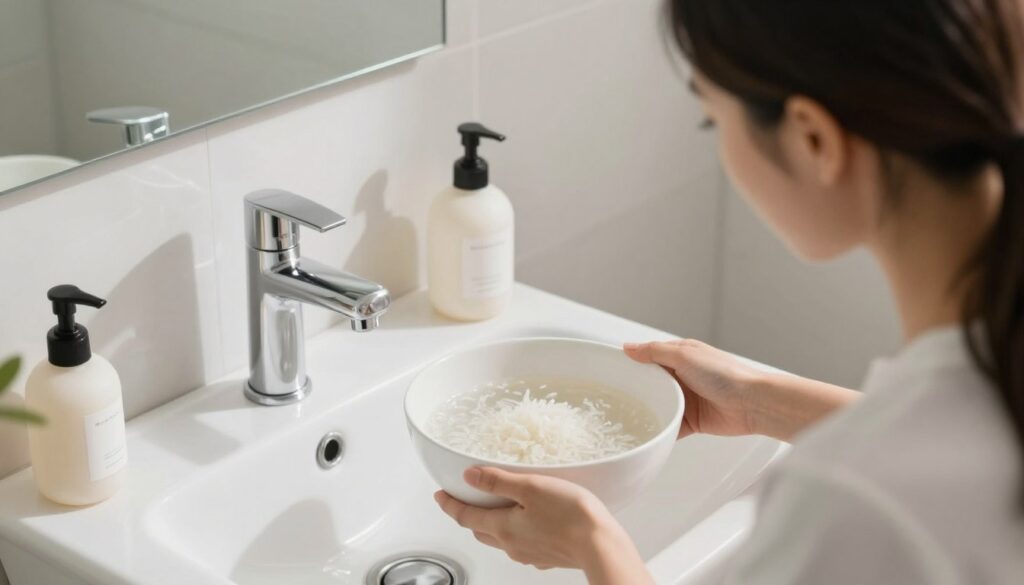
Weekly schedule options for different lifestyles
Find a rice water hair care routine that fits your lifestyle. Choose a pace that works for you and your hair.
- Minimalist: 1x/week rice water rinse right after shampoo.
- Moderate: 1x/week rinse, plus 1 mask every other week when hair feels dry or dull.
- Intensive: A rinse every 5–7 days, focused on mid-lengths to ends, only if your hair stays soft and flexible.
For quick mornings, use a squeeze bottle for your rinse. Apply it fast, then clip your hair up while you finish your shower.
How to layer rice water with shampoo, conditioner, and leave-ins
Layering is key to avoiding a stiff feel from rice water. Start with shampoo, then rice water, conditioner, and leave-in for softness.
- Shampoo to clear oil, sweat, and product film.
- Apply rice water as a short-contact rinse, focusing on the scalp and lengths.
- Conditioner next to add slip and help detangle.
- Finish with a leave-in to lock in moisture and improve manageability.
If rice water makes your hair feel rough, adjust. Use a richer conditioner and shorten the rice water time.
How long to leave rice water on hair without overdoing it
Begin with 2–5 minutes for rice water. If your hair feels great, you can gradually increase to 10 minutes.
Don’t leave rice water on too long. It can make some hair types stiff, like fine, dry, or color-treated hair. Aim for a routine that keeps your hair soft and healthy.
How to use a rice water hair rinse for shiny hair
If your hair looks dull or feels rough, a rice water hair rinse can help. It’s all about a clean routine and gentle care. This way, you get shiny hair without feeling heavy.
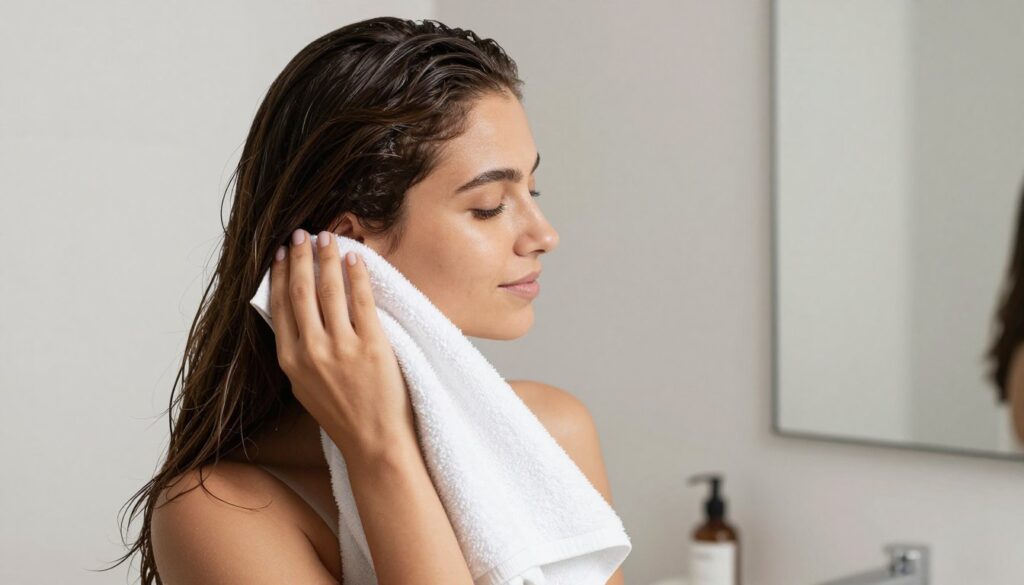
Step-by-step rinse routine in the shower
Begin with a hair-simple routine and adjust as needed. Make sure to cover evenly and keep the rinse time short.
- Shampoo as usual, then squeeze out extra water so the rinse won’t slide right off.
- Pour the rice water hair rinse over mid-lengths and ends first; apply to the scalp only if you’re not easily irritated.
- Use your fingers to smooth and detangle gently, like you’re pressing product in.
- Let it sit for about 1–3 minutes so the hair cuticle has time to settle.
- Rinse well, then follow with conditioner to keep hair soft and flexible.
Rinse-out vs. leave-on approaches
A rinse-out method is great for beginners, as it’s easy and effective. It’s perfect for those who want a smooth finish.
If you prefer a leave-on approach, use a very diluted version. Apply it lightly to the lengths only. If you notice coated roots or dry ends, switch to a rinse-out method next time.
Tips for maximizing rice water for shiny hair without residue
- Dilute if the mixture looks cloudy or feels slippery; too much starch can make hair look dull instead of glossy.
- Focus on mid-lengths and ends, where shine shows most, and buildup is less likely.
- Rinse longer than you think you need to, until the water runs clear and hair feels clean.
- Finish with a cool-to-lukewarm final rinse, then blot with a microfiber towel or a soft T-shirt.
- Skip rough towel rubbing; gentle handling helps the cuticle lie flat, which supports the shine you want.
DIY rice water hair mask ideas for softness and hydration
When your hair feels dry or hard to comb, a rice water hair mask can help. Think of masks as optional support, not a must. Use them when your hair needs extra comfort and softness.
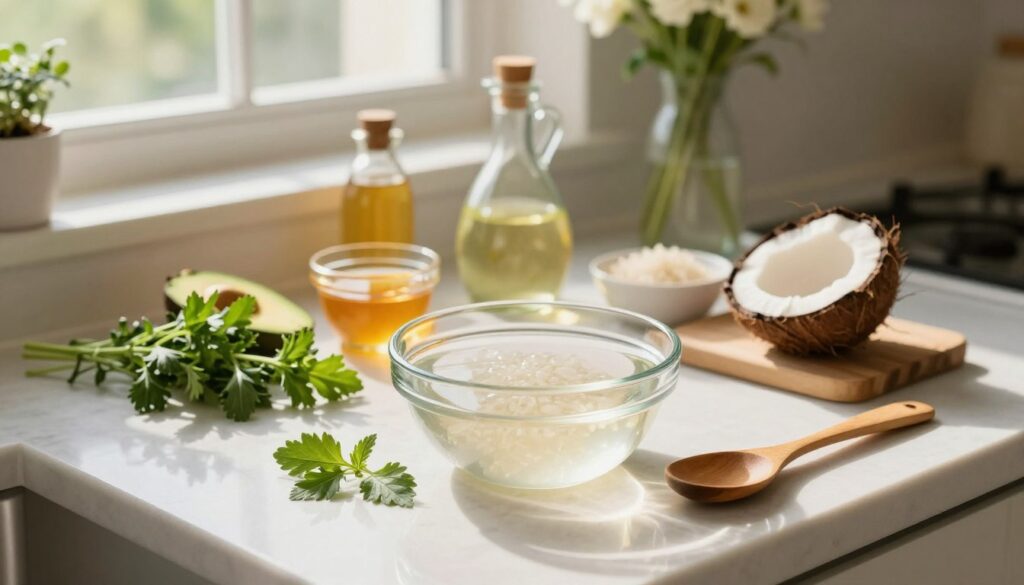
Rice water + aloe vera mask for lightweight moisture
This mask is perfect for hair that gets weighed down quickly. Aloe vera adds a light, smooth slip. It makes detangling easier without leaving a greasy feel.
Mix a small amount of aloe vera gel into rice water until it’s silky but not runny. Apply from mid-lengths to ends, then rinse after a short time.
Rice water + honey mask for dry hair
Honey is like a gentle drink of water for dry hair. In this mask, honey makes strands softer and more flexible after rinsing.
Keep the mix light, and rinse longer than you think. Follow with conditioner for smooth, easy-to-manage hair.
Rice water + yogurt mask for smoother-looking strands
Yogurt turns this mask into a creamy treatment. It’s great for dull or puffy hair, leaving it smoother.
This mask can feel heavier. Fine hair may do best with a shorter processing time. Start with the ends, adding more only if needed.
How to rinse masks cleanly to avoid buildup
A clean rinse keeps your hair light and protects shine. Buildup can make hair feel stiff or hard to style, even after a mask.
- Use lukewarm water to loosen residue without drying out your scalp.
- Massage gently at the roots to lift product, then rinse through the lengths.
- Use a light shampoo only if your hair feels coated, then condition as usual.
Rice water for hair growth: supportive habits to pair with treatments
Rice water is a great addition to your hair care routine. It can help reduce breakage and make your hair smoother. But the real secret is combining it with simple habits you can do every week.
Scalp massage techniques to complement rice water
Adding a scalp massage to your routine can enhance the benefits of rice water. Use your fingertips, apply gentle pressure, and move in circles. Spend two to five minutes on it, keeping it comfortable.
- Start at the hairline and work back in small sections.
- Pause on tense spots, then soften your pressure.
- If your scalp feels sore or irritated, stop and reset with a gentler touch.
Protective styles and low-manipulation routines
Protect your hair from damage to see the best results from rice water. Avoid too much heat, tight styles, and excessive manipulation. Choose styles that are easy on your hair, reducing daily stress.
- Rotate low-stress styles instead of wearing the same tight look for weeks.
- Detangle slowly, ideally on damp hair with slip, and avoid over-combing.
- Sleep on a smooth fabric to cut down on rubbing and snagging.
Nutrition and hydration basics that support growth goals
Your hair reflects your overall health. Use rice water for hair growth, but also focus on staying hydrated and eating well. Include protein and iron in your diet to strengthen your hair.
If you notice sudden or heavy shedding, talk to a hair expert. They can offer personalized advice to help you adjust your routine without guessing.
Rice water for hair loss: what it can and can’t do
If you’re looking into rice water for hair loss, it’s good to have realistic expectations. A rice rinse can make your hair look and feel better. It can also make your hair easier to manage, which is great when you’re losing a lot of hair.
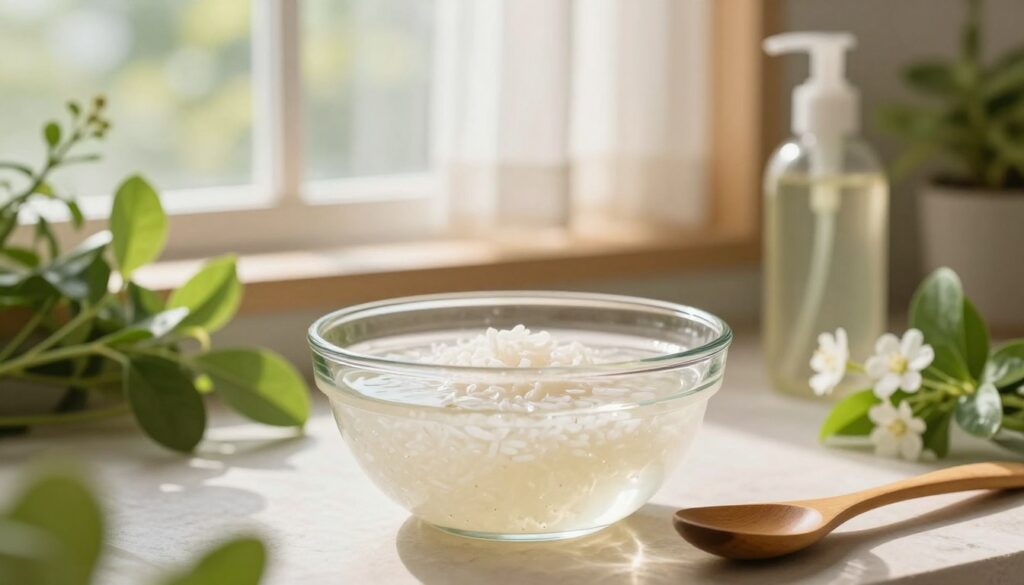
Rice water can help your hair grow longer by reducing breakage. It makes detangling easier, which means less damage when styling. This gentler approach helps prevent hair from breaking off at the ends.
- Can help hair feel stronger and more manageable
- Can reduce breakage-related thinning through the mid-lengths and ends
- Can support a calmer routine by lowering friction during brushing and heat styling
But rice water has its limits. It can’t fix hair loss caused by hormones, low iron, or scalp problems. If your hair loss is due to these issues, a rice rinse won’t solve the problem.
- Can’t treat hormonal shifts or nutrient deficiencies
- Can’t reverse autoimmune-related loss
- Can’t undo traction-related thinning if tension is ongoing
- Can’t replace targeted care for scalp conditions that need specific treatment
If you notice sudden hair loss, scalp pain, or a wider part, see a professional. Use rice water as a supportive measure. It can be part of a routine that protects your hair and reduces breakage.
Rice water for damaged hair: repair-focused tips and best practices
Damage is personal. It might come from bleach, color, relaxers, or daily heat. Rice water can help your hair feel softer and look shinier.
It’s like a texture reset that adds softness and control. Adding rice water to your routine supports smoothness without taking over.
How rice water helps the look and feel of overprocessed hair
Overprocessed hair feels rough because the surface is raised. Rice water makes hair smoother by improving glide. This makes detangling easier.
This extra slip means fewer knots and less breakage when combing. It also makes hair look glossier because the cuticle lies flat, reflecting light better.
Keep it gentle: if your hair feels stiff, dilute more or use it less often. Rice water works best when it adds softness, not stiffness.
Best pairings with bond-building or protein treatments
Pairing rice water with conditioning can be a game-changer for damaged hair. Use a rich conditioner after to keep strands soft.
Bond-building treatments are also helpful, but use them with care. Many people alternate between bond products and rice water to support hair without overloading it.
- Moisture first: follow with a conditioner or mask to keep elasticity.
- Protein with care: use occasional protein, but back off if hair feels brittle or straw-like.
- Balance matters: alternate strengthening and hydration to avoid buildup and stiffness.
Heat styling adjustments to reduce future damage
Prevention is key. Rice water improves manageability, but heat can undo progress if it’s too hot or too frequent.
Lower your tool temperature, use a heat protectant, and limit flat iron passes. When blow-drying, aim the airflow downward and use a smooth brush to reduce friction.
- Work in smaller sections so you don’t repeat heat over the same area.
- Stop at “dry enough,” then finish with minimal heat or cool air.
- Plan heat-free days so rice water for damaged hair has room to support softer styling.
Common mistakes with rice water hair care and how to avoid them
Rice water can seem like a quick fix, but small mistakes can mess up your results. With rice water hair care, a little planning is key. This helps balance shine, softness, and scalp comfort.
Using rice water too often and causing stiffness
If your hair feels stiff or straw-like, you might be using it too much. Too much use can make hair less flexible, even if it looks smooth.
Try using rice water less often, dilute it more, and follow with a richer conditioner. This simple change can help your hair feel better without losing benefits.
Skipping patch tests and ignoring scalp reactions
Your scalp is skin, so treat it with care. If you notice itching, burning, flakes, or a tight feeling, stop using rice water and think again.
Always do a patch test behind your ear or on your inner arm before trying a new method, like fermented rice water. It’s a small step that can prevent irritation.
Not diluting concentrated rice water hair treatment
Boiled or fermented rice water is often strong. But strong doesn’t always mean effective. High concentration can leave residue near the roots and along the hairline.
For a light and clean rice water hair care, start with dilution and adjust slowly. If your hair feels coated, scale back and rinse longer.
Improper storage that leads to unpleasant odor or irritation
Storage habits are as important as the recipe. Dirty containers, leaving them at room temperature too long, or keeping them past their freshness can cause odor and irritation.
- Use a clean, sealed container each time you mix a new batch.
- Refrigerate promptly and avoid leaving it out on the counter.
- When in doubt, throw it out and make fresh rice water hair treatment before your next wash.
Conclusion
Rice water hair care is best when seen as a supportive ritual, not a quick fix. It’s about keeping things simple and consistent. Adjust your routine as your hair changes with the seasons, styling, and color.
The real benefits of rice water for hair are in how it feels and looks. You’ll notice more slip, softer strands, and easier detangling.
Start with a gentle, rinse-out approach. Use diluted rice water after shampooing and keep the treatment short. Pay attention to how your scalp feels and how your hair looks.
Set smart boundaries for the best results. Don’t overdo it with frequency, and store leftover rice water safely. Rice water care should enhance your life, not stress you out.
When you need extra help, add products that match your goals. Use Olaplex for bond-building, Kérastase for shine, and SheaMoisture for moisture. Always listen to your hair’s needs and let thoughtful care guide you.